Showing posts with label Bird. Show all posts

Saturday, June 9, 2012

Raising Finch Birds


Raising finch birds can be the easiest thing you'll ever do, but it can also be the hardest. It all depends on how you've prepared yourself for the set-up. If you've done your reading and research even before you've taken your new pet home, then you will have been able to make the necessary preparations for them. Not only that, you will have also equipped yourself to handle any potential emergency or problem that you may possibly come across. This is how important preparation is! It can totally alter your experience with these birds!
If you've always wanted to keep finch birds, maybe for future breeding purposes, or simply for household pets, then you can start your education now. We have some invaluable tips on how to raise them right! Read up and learn a thing for too, so your birds go to a happy and healthy home.
Tips for Your Finch Birds
1. Understand the nature of the kind that you get- Finches are social animals, so they naturally look for companions. It would make no sense to buy a single bird. He or she would feel lonely, and probably die in a matter of weeks. Keep your finch happy and engaged by making sure that you get a pair, or even multiple finches.
2. Find out what your pets like to eat- research will tell you what most finch birds eat, but you can also use your powers of observation to see if they prefer one type of food over the other. While you're at it, please don't forget to give them enough water. Lack of either may kill them.
3. Find a way for your pet to get some exercise- a fat or obese finch would not be ideal for breeding. Not only that, in the same way that humans suffer from being fat or obese, finches may also encounter complications from having the same condition. A great way to get your finch birds moving would be to provide them with a spacious cage. Perches and swings are also great additions so they can get some exercise. Lastly, clever placement of their food and water containers may force them to move from one end of the cage to the other to get either.

Tips in Keeping Aviary Finches in Great Shape


We're all too familiar with how great an expense investing in aviary finches can be. These finches require a lot of money, time and expertise to set up. If you've already done all that work so far, then you need to make sure that you protect your investment and make it last for as long as you can! In order to do that, you may have to learn how to keep your finches in top shape. Not only does it benefit you, the owner of these finches, but learning to maintain your finches will serve your feathered friends well too! After all, these finches are your finches' home, and you want them to have a happy one, right?
Maintaining aviary finches is easy, especially if you have a helpful guide. To help you get a head start, here are some great tips!
1. When building your aviary finches, make sure that the materials used are top grade- Otherwise, your finches aviary will not last for very long, and you will need to replace it again. Make sure that the wires that you select are strong and sturdy, and will not be easily bent. You may also want to coat these wires in a film that protects it against rust. 
2. Pay attention to where you place your aviary finches. Do remember that the elements can be your worst enemy when it comes to keeping your finches aviary in good shape. The rain can cause the wires to rust, and the sun can wear out the paint. To protect your finches against the elements, position it properly in your home. Make sure that it hardly gets wet in the rain, and is only exposed to the sun for a limited amount of time everyday. 
3. Lastly, always remember to check your aviary finches every once in a while for minor or major damages, or anything that needs to be repaired. Remember that minor damages will probably cost you less to repair, and you may not even need to spend for new finches. If you leave minor damage to get bigger, then you may have to replace your expensive cage altogether and you really want to avoid that if you can. 
Caring for your finches cage should be easy after these tips. We also advise you to use your common sense! If you think your finches' cage needs replacing for one reason or another, then go on and do it. You will see what your finches need best.

Want to Keep Him Healthy? What Do Parrots Eat for a Long, Happy Life?


How many times have you gone into your local pet store looking for pet care items and you are greeted by a whistle or simple "Hello there." You look around to return the nice gesture but cannot find the person that it came from. What you see is this beautiful bird staring at you and again you hear "hello there!" It came from the beautiful parrot in the cage next to you. You tell yourself that you want to take him home. But what must you buy for him? What do parrots eat? So many questions!
You are so taken by this little fellow that you spend the next 10 minutes talking to him forgetting just why you are there in the first place. Sound familiar? Wondering how much he costs to take home with you? Now that you've spent the next half hour talking to the salesperson about him and finalizing the purchase, you think that you are done. Nope! Not yet! He will need to eat once you get him home. But there are so many different bird foods in that aisle. There are seeds, peanuts and many different colorful pellets.
Although your parrot would probably eat many of the wide selection there, you must think about the health and wellness of your new friend if you want him to live to his full life expectancy. As you may have heard, parrot species can live anywhere from 10-80 years depending on which parrot type you choose. 
You will need to feed your parrot a variety of foods from the seed selections, pellet diet to fruits and vegetables. The different varieties of food available mostly have different ingredients that are essential to your parrot's good health. For example, a diet made up of only seeds does not give your parrot the proper nutrition needed to live long and healthy. 
The pellet food available is a more balanced diet that when added to the fruits and vegetables you will provide him will give him what he needs to be happy and healthy. You will choose the food that best suits your parrot's size and weight requirements. A parrot is a wonderful friend that can be a lifelong companion for you if you know how to properly care for and feed him so he can live to his full life expectancy. Taking the time to educate yourself on the basics of companion bird care before you actually go out and purchase one will only set you up for success and give your new family friend a head start to good health and a happy life.

Tuesday, May 29, 2012

Popular Types Of Pet Cages Today


Different styles of cages 
Pet cages come in many different styles and sizes. The kind of cage you select will depend mainly on the type of animal you are having. For medium and large animals, there are over-sized cages in which your pet will be able to sit, stand, stretch and turn around quite comfortably. There is also sufficient space for food and water containers.
For smaller animals, you may use a pet travel bag which can be carried around with you. These bags come in various styles including back packs, front slings and bags with handles and an opening at the top for the animal to push its head through. Cats normally lie down most of the time when traveling, so the pet cages need not be very high as long as the top of the cage doesn't press down on its head. 
Cages for dogs 
The most common types are made of solid plastic and consist of three pieces - a top, a bottom and a removable gate - which can be taken apart and cleaned. However, you will not be able to fold these variants. Wire cages are much cooler as they have excellent ventilation and there is nothing to hinder the vision of the animal. They are fairly heavy and some can be folded. They sometimes come with various pads and covers for the added comfort of the dog. Soft cages are very light and can be folded. However, they are not recommended for puppies that are likely to tear and chew at the fabric. 
Cages for birds
Birds need plenty of room for climbing and exercise and ideally their cages should have horizontal instead of vertical bars. There are many shapes and styles of bird cages but nowadays most of the bird cages are the angled type and not round as studies have shown that round cages can affect most birds psychologically. These cages are usually hung or placed on a stand. 
Cages for hamsters 
The most common type is the traditional wire cage which comes with a plastic bottom that can be removed for cleaning. A water bottle and feeding dish are normally attached to the cage.An increasingly popular hamster cage is the expandable type which sometimes comes with a wheel and slide. This is basically a simple plastic box to which you can add tubes leading to other separate areas or create a maze of tunnels.
Cages for cats 
Nowadays people prefer to keep their cats outdoors, where they have access to lots of fresh air and sunshine. There are two types of outdoor cat enclosures in the market. The most common type is made of flexible netting and can be easily dismantled for storage when not in use. The other type is made of wire mesh and is more solid. It can usually be left outdoors permanently.
Popular cages for pets today can be found in any animal shelter or pet stores and finding an appropriate one will add to the physical and psychological well-being of your pet.

Tuesday, January 4, 2011

Falconry Gloves - Essential Falconry Item


A falconry glove is an essential product which an enthusiast requires before he starts with falconry art practice. It is one of the important items which ensure safety of the falconer especially when the contender is engaged with bird of prey. For few days many new birds never miss the opportunity to put down gloved hand of trainer. These birds should be handled carefully all through night and day, then only one can make these beautiful birds learn something innovative and new. Well the trainer talks to these birds very politely and carefully through out the day, but strokes them very gently. Falconer also requires training so as to learn the tricks of handling the birds of prey nicely. Trained birds are obedient and docile and if you handle them respectfully and carefully then there are chances they will hurt the falconer in future.


Some falconry goods like whistles, hoods, jesses and anklets, creance equipment, knives etc. are regarded as the best falconry products.

Arabian falconry is one such name which offers great products and service to their client. They have all types of falconry supplies like falconry bells, swivels, falconry glove, falconry hoods, falconry jesses, falconry perches and block. To know more about this falconry supplier then visit their official website and browse their different sections. This site has all the important information about the falconry region. You can learn on how you can purchase the best product. In fact we also give you the chance to win cool falconry kit. Over the years we have gained so much popularity and respect in supplying the best products. We offer the best falconry equipment from Arabian region at a very affordable price. Our products are reliable and incomparable.

Wild Bird Profile: The Rose-Breasted Grosbeak


Characteristics: Rose-breasted grosbeaks are large finches with very large bills and easily identified by their plumage. Males are black and white with a bright pink patch on their breast and inside their wings. Females are olive-brown with a distinct pale supercilium on their face and their breasts are streaky. First summer males are similar to males but have browner plumage and a duller pink patch on their breast.

Distribution: RB grosbeaks breed throughout the northeastern U.S. (from the Great Plains to New England) and in central Canada (Alberta, Saskatchewan, and British Columbia). They also breed along the Appalachian mountain range. During the winter, they breed in southern Pacific slope and Gulf Slope of Mexico, the rest of Central America, and northern South America.

Movement: Based on banding data, RB grosbeaks breeding in the eastern U.S. winter in eastern Central America and South America and western breeders are found in Mexico and western Central America. Migratory flights are typically during the night.

Food: During the breeding season, RB grosbeaks eat equal amounts of insect matter and vegetable matter including fruit and seeds. During the fall, they eat primarily fruits. RB grosbeaks are often found at feeders with black-oil sunflower seeds. They will use tube feeders as well as platforms feeders.

Sound: The male RB grosbeak song sounds incredibly similar to scarlet tanagers and American robins. The song is extremely melodic with a few pauses. The grosbeak song has few pauses compared to robins and is less crass compared to tanagers.
Nesting: Males will arrive to their breeding grounds before females in May. They have eggs and nestlings between May and July and generally have only one brood. Nests are open cups and their eggs are typically pale blue or green with brownish speckles.

Similar species: Rose-breasted grosbeaks are closely related to the black-headed grosbeak but looks entirely different. They will breed (hybridize) with each other where their ranges overlap.

Interesting fact: If you open the wings of the grosbeaks, you will see a bright orange (female) or bright pink patch of feathers. This is rarely seen without the bird in the hand.

Saturday, December 11, 2010

Information on Runner Ducks


The Indian Runner Duck has to be one of the most fascinating of all water fowl and they were introduced into Europe around 1800 and the first evidence of the Indian Runner in Britain was about 1830. The Indian runner Duck has a perfect upright stature and is often referred to as the penguin bird simply because of its waddle.

The Indian Runner has a slim neck and a long, narrow head, the legs and shanks of the Indian runner are also incredibly short which is why the Indian Runner walks and runs very upright and straight.

The Ducks are delightful birds and do make excellent pets, they are also quite hardy, meaning they suffer rarely from any serious illnesses. Ducks will need a larger house than a normal chicken coop, especially as they stand quite tall and need to be able to get in and out of the house easily. Each Duck will need a space of 2sqf per Duck in the house to ensure they have enough room to sit. Many people prefer to lay a concrete base for the floor of the house and then build around the floor with wood to provide a good solid Duck house. Concrete floors are fine as long as there is plenty of bedding to keep the Ducks warm and straw is a perfect example of good, warm bedding. Runner Ducks are renowned for being slightly messy and their bedding will become soiled quicker than a standard chicken coop and for this reason you may need to remove bedding and disinfect the floor before replacing fresh straw and depending on how many Ducks you have, you may need to clean them out twice a week.

Runner Ducks will not usually use a nest box and will simply lay their eggs wherever they feel like it and for this reason you need to be aware that eggs may get lost in the bedding. Runner Ducks are fantastic at foraging for their own food and as well as the food you provide, they will find a lot of their own food. Ducks will eat Layers pellets and crumb and mash should be avoided as Ducks have a problem picking this up. Ducks are best fed twice a day and you can also feed some corn late afternoon which your Ducks will look forward to. Water should also be available readily and your Runner Ducks will drink plentifully throughout the day and so making sure their water supply is readily available is very important.

Runner Ducks are fantastic pets and are sweet natured and for this reason they make excellent pets for children.

Attracting Birds Without Bird Seed


Many people think that the best way to lure birds to their yard is with bagged bird seed. While this does draw in birds to their yards, there are alternative ways to entice our feathered friends without visiting the store every couple of weeks.

A good water source will attract a wider range of animals than bird seed because only certain species eat seeds, but all of them require water. In the summer months most species like to bathe. Moving or dripping water will tempt them to visit even more. They are lured to the splashing sound, and the mosquitoes will be unable to lay eggs in the moving water. To accomplish this you can buy a wiggler or a pump of some sort, and if possible one that is solar powered so it does not rely on an outlet. Another way to create moving water would be hanging a bottle with water and punching a small hole in the bottom to drip into the bird bath. The water should be cleaned at least once a week to reduce disease transmission between the birds. If there is no moving water it should be cleaned every other day to prevent mosquitoes.

Another way to attract birds without any bird seed is to stop raking your yard. The added leaf litter gives insects more places to live, which will attract the birds that feed on bugs, such as Eastern Towhees. If you do not like the look of leaves all over your yard you can just rake them to one corner or under a bush. These leaves will also compost and creates good soil for plants.

Planting native plants in your yard will attract birds, sometimes more than store bought bird seed. Plants with berries are good for fruit eating birds, for example Cedar Waxwings; and plants with bright and colorful flowers will attract nectar feeding birds, including Ruby-Throated Hummingbirds. Before planting any plants in your yard you should do a lot of research, making sure it is native to the area and not invasive. The best source to check would be with your state's Department of Natural Resources.

These tips will help attract birds to your yard with less money and can attract more birds than the basic store bought bird seed.

African Grey Parrots - Are They The Smartest Parrots?


There are numerous beautiful birds that exist today; some sing or talk more than others, some are more intelligent than others and some make great pets. One particular parrot is called the African Grey Parrot. This African parrot is one particular bird that is not only beautiful, it is very smart, has the ability to speak many words and makes a good pet for bird lovers.

In addition to their high level of intelligence within bird species and their ability to have a big vocabulary, the African Grey is also admired for their coloring. The colors are not vibrant like many parrots you may find in the jungle or zoo, but this parrot is sleek and elegant. African Grey's are of two different families, one is the Congo African Grey and the other is the Timneh African Grey. As the name states the bird is of a grey color but the Congo has a lighter grey compared to the Timneh whose grey is darker. Both types do have a colored tail, the Congo's is red and the Timneh's is maroon.

The African Grey's Characteristics

The African parrots are considered to be medium sized and their length can be 10 to 14 inches. Within many bird species, the male usually has more vibrant colors than the female but this parrot the coloring is the same for both the males and females. There is one physical characteristic between the males and females and that is that the female has a narrower head as well as a slender neck. The life span is quit long and they can live around 60 years in age.

When choosing this African parrot for a pet, it is best to keep in mind its long life span as well as its intelligence level. Are you willing to commit to this responsibility for a very long period of time? In regards to the parrots intelligence, just like a human, it needs constant interaction otherwise it will be bored. If a human becomes bored, they can have behavior problems and this is the same for the African Grey. Understanding the needs of this African parrot is very important so that it will receive a quality of life that it deserves as it won't be living in its natural environment.

Knowing the history and behaviors of the African Grey, it will help you to provide both physical and mental activities so that your parrot will maintain a healthy life and have a good behavior pattern. Although the parrot is relatively easy to care for, it does require discipline to keep up the good behavior. If there is no discipline or interaction with the African parrot to keep its mind occupied in a positive manner, the parrot might begin to be cranky or even show negative behavior such as feather picking, chew on its cage or even bite. If the African parrot is left unattended to for too long without positive interaction, the parrot may also begin to cause self-infliction; this can lead to very serious physical complications.

The beak is extremely hard and strong as it is used as a tool to not only search for as well as other uses. By nature, African Grey's are extremely social birds; they tend to group together and will show affection for one another. In captivity, the parrot's owner tends to be considered the parrots flock and the parrot will show certain signs of affection to the owner. The African parrot may not prefer a lot of cuddling from its owner but it does enjoy having its head petting or scratched. One deep sign of affection is when the parrot will regurgitate and may even try to "kiss" the owner's mouth (the human mouth has many bacteria that could harm the bird) so try to prevent the "kiss" of possible.

Wednesday, August 11, 2010

Top 10 Most Popular Types of Parrots


Parrots
are becoming more and more popular as pets in captivity. People love to train them and teach them tricks and to speak phrases. In the wild, these birds have been admired because of their beauty, intelligence, and outgoingness. They have similar characteristics as humans, as they replicate human words and sounds. Parrots have very childlike behavior and thinking, with some behavioral scientists demonstrating they have the intelligence and communication skills of a 3 year old. This is why these birds make fantastic companions and pets.

There are many kinds of parrot types in the animal kingdom with varieties based on size, shape, and feather colors. The following outlines the top 10 most popular types as pets and in the wild:

1.) Parakeets - Parakeet parrots are known by their long tails, and tend to be a more favored parrot type compared to the Cockatiel for example. Known as a small parrot, the parakeet has bright feather colors. Their behavior is typically energetic and they crave human interaction.

2.) Cockatiels - Cockatiels are smaller parrot types typically identified by their notable head and tail feathers. Males have great speaking abilities, while the female Cockatiels are quieter, but are more aggressive. The females also are more likely to bite and hiss. The Cockatiels are good pets in captivity, as they are very sociable and love to interact.

3.) Lorries & Lovebirds - These birds are from South America and have been an inspiration to many as they are extremely peaceful birds with bright feather colors. They do not require much space, are able to maintain great health, and love to be with other parrots.

4.) Conures - The Conures are more playful birds that are large parakeets, which have a slightly smaller build with longer tails. These parrots are from Central and South America, and have friendly personalities, sometimes leading to louder squawks.

5.) Macaws -These birds are mostly recognized for their large frame and bright rainbow colored feathers and beaks. Originating from the tropical regions of South and Central America, the macaw shows great intelligence with fantastic speaking abilities.

6.) Amazon -Also known as green parrots (since most have an overwhelming green feather color), Amazon parrots are very smart, talkative, and friendly. These parrots are easier to train than other parrots, and can duplicate the human voice of their owner.

7.) Cockatoo -Most known by their standing head crest and arched bills, these parrots types are larger than many other parrots but have less color in their feathers. These parrots are both friendly and talkative with frequent squawking and screaming.

8.) Caiuges - This parrot type is regarded as both smart and attractive in the parrot world. These parrots have an array of different feather colors, and have been referred to as the seven-colored parrot from their vast feather colors.

9.) Poicephalus Parrots -Originally from Africa, these birds are usually on the shy side but have endearing personalities. Ranging in size from small to medium, this parrot type demonstrates good and social behavioral traits.

10.) Parrotlets - These types are also known for their smaller size. With energetic, enjoyable, and courteous attributes, they can duplicate human voice and words, but are harder to understand. In the wild, these birds travel in flocks.

Parrots can be a fun and rewarding pet to own and care for. It is important to ensure your parrot receives proper training and love with much time devoted to their parrot. Remember this is a long term commitment, since parrots can live literally decades.

Parrot Feats


Ever wonder how parrots look so wise and lovable? This is because of their learned feats that parrot enthusiasts teach their pets. Teaching parrots how to acquire feats and traits are quite tricky. We do these to gain a play time with our pets and share wonderful experiences with them. It could also lessen some of the parrot's distasteful attitude sometimes.

As we do the teaching, we need to consider where we hold this important moment for our pets. The space needs to have a sense of restfulness in the air to gain the bird's undivided concentration to what we are teaching them. It would also be best for them to eliminate too much things that are not needed when teaching the bird some feats. As an enthusiast, be aware that you need a stress free environment and trusting relationship with your pets so that no bad effects would be produced in your parrot's experience of your teaching. You must also have a strong will to maintain your positiveness in teaching them feats.

A favored feat that parrots do is when they come forward to you. You need to say "step up" for them to do this. Give them a gift like a piece of food for good behavior once they follow your directions. This feat basically has rewarding outcomes when the parrot learns eventually, as well as for their breeders. In the case of small birds, you need to place your fingers in front of them to do this feat and entice them with a piece of food. As for the larger parrots, you need to place your arm in front of them or where they perch and hold out a gift as reward.

Once the parrot learns to come forward, how them how to turn in their place. These is done by holding out example, a fruit in front of them and simply go towards your pet's back for them to trail on the fruit with their eyes and give them a fruit or pellet as a reward for good behavior. Some pets easily trail on their back and grab the fruit with their beak while others need more convincing as it is for them do the feat. Now once, they accomplished this feat correctly give them food as a gift.

Do your parrots scream in the middle of the night which often bothers you? If they do you need to teach them the feat of talking. Talking could basically improve their well-being as your pets. Their vocal chords are exercised and they would be very playful with your and your family. You need to start them with some normal common words like, "hello" or "goodbye". Carefully say the word over and over again until you hear them make some kind of sound as a response. At times, family members are also encouraged to speak to the bird using the word you taught over and over for your parrot to learn that word naturally. In turn, your pet would adapt to the word and repeat them correctly.

Monday, June 28, 2010

The Changes in Finches Beaks


As a result of this observation, he later wrote his theories and ideas about what he thought were the actual origin of species, and which led him to write the publication, The Origin of the Species.

Although perhaps rather considered controversial during his time, it led future scientists and biologists of the modern era to investigate the matter further. Since Charles Darwin's publication of The Origin of the Species, a number of scientists travelled to the Galapagos Island to see the real deal for themselves, and to eventually disprove - or prove - Charles Darwin's theory of evolution and natural selection. Unfortunately no one was successful at either proving or disproving the said theory.

However, in the year 1973, Rosemary and Peter Grant set forth to Daphne Major, one of the islands in the Galapagos, to do their own observations and investigations. They were successful at proving Darwin's theory. They camped and stayed in Daphne Major for a few seasons and after just a few months, witnessed for themselves evolution in full action - that is, they observed changes in the size and shape of the beaks of finches found on the island.

These birds are mostly the same size, had the same brownish or black color, rounded tail that tends to get cocked to one side, and wings that are short and noticeably rounded. These were common characteristics of the finches on the island during the time Darwin first set forth in the Galapagos; only their beaks aren't the same. A few exceptions were noticed in coloring, but mostly they were similar when it comes to body shape and form - again, except the beaks.

Changes in the finches' beak shape and size were due to the finches' adaptation to available food. The beak function is for eating, a tool that helps in survival. Each specie as a result of certain fluctuations or changes in food scarcity or abundance has evolved its own unique beak design to better suit their food preference.

Some finches adapted to eating insects, therefore their beaks changed form to make them even more suitable and effective to eating insects. Other finches on the other hand, have adapted heavy and thick beaks that are more effective in cracking bigger nuts and seeds. Other finches began to have pointy beaks, because the pointier the beak the easier it is to pick small seedlings for food.

Later, Harvard Medical School researchers found the molecule responsible for the beak change. This protein molecule, called "calmodulin" regulates the gene that is involved in beak-shaping. Researchers found out that those with longer beaks such as the cactus finches have higher levels of calmodulin than those with shorter beaks. Calmodulin is then associated with longer beaks. Finches with blunt beaks were found to have low levels of calmodulin.

Preparation For Gouldian Finch Breeding


The most obvious is to feed your finches the proper diet. Their environment must meet their needs and you must ensure they are healthy because an unhealthy Gouldian finch may be too sick or unsuited for breeding. Also make certain your pair is healthy is the first step to successful breeding.

You must prepare their diet in advance. A proper diet is one that is full of fatty acids, vitamins, minerals, proteins, and trace elements are all good for them. Although protein can be found in many seeds, it is highly recommended that they also consume boiled eggs, which is full of protein, insects, and green leafy vegetables as well as soaked seed and some sprouts. It is recommended to introduce them to this diet gradually so that they eventually get accustomed to the new food and will feed them to their young. In addition to their diet, ample amounts of iodine and calcium found in multi-vitamins are also needed.

Secondly, make certain sure your finches are mature. They should be a year old at least, but more preferably two years old, to be mature enough to start breeding. If you breed them too early, the female finch might experience some problems that may be deadly for her; for example egg binding or she might throw away her eggs or chicks. A young male finch on the other hand, may get over the top when impressing the female finch that he might continue building the nest right on top of the eggs, which may endanger the young birds or eggs.

Young birds in particular may feel stressed out. Another potential problem when your finches are too immature is their tendency to feel that an invader is among them, and in turn may throw away the chicks once they are hatched. Waiting until your Gouldian finches are mature enough for breeding is time well spent and at the same time you would be avoiding many issues that might disappoint you.

Heat humidity and light are also very important factors to keep your finches healthy for breeding. Female Gouldians need at least 15 hours of sunlight. This triggers their instincts for breeding. Timers can also be installed in lights to make sure they get adequate lighting. Keep their environment at least in 68 degrees during winter months. Humidity in the breeding room shouldn't be less than 55%. Humidity is particularly important to the birds because it keeps their skin and feathers in good shape and avoids over dryness in the egg membranes when the chick attempts to hatch from their shell.

You can much have success in Gouldian finch breeding if you follow the tips above. Once everything is in perfect condition, Gouldian finch owners can breed at any season.

Does Your Pet Bird Love to Eat What You Are Eating?


Do they even try to steal food from your hand or dinner plate? I know our Quaker parrot, Charlie does. Whatever we are eating Charlie doesn't want to miss out on. As soon as he sees any type of food he wants it and he is not going to stop performing until he gets it.

Whilst we like to give Charlie a wide variety of foods, I have read that there are some that are highly dangerous to birds even fatal and you must not let your bird eat any of them. They are, avocado, chocolate, apple seeds including cherries, peaches, apricots and pears contain trace amounts of cyanide within their seeds. The fruit of the apple and pear is fine but the seeds are poisonous and there may be pesticides present on the fruit's skin so it is important to wash all food, onions, mushrooms, tomato leaves including the green coloured part, stems and vines and the same for potatoes, salt, caffeine including soda, coffee, and tea, dried beans are all not to be fed to your pet bird, cooked beans are considered ok as long as they are thoroughly cooked. Boiled eggs and the shell are a good source of nutrition as well.

Sometimes at meal times we make up a separate plate just for Charlie and sit it next to us on a birdbib so as he still feels like he is getting the same as us. There are times though that no matter what we do he just wants to eat from our plate. Although this may seem cute, funny, or whatever, it is not safe for your bird. They may just eat something that is poisonous to them and it could be fatal and then how cute would that be. I have watched my son clear away a space on his plate just for Charlie's food! Mmmm

After researching I have found that there is a wide variety of food that you can offer your pet bird, whether you have a Quaker parrot, Parrot, Budgerigar, Cockatiel any Parakeet. The foods include grapes, oranges, bananas, mangoes, melons -- just about any kind of fruit imaginable is good for your bird. alfafa sprouts, chile, broccoli, cauliflower, carrots (one of Charlies favourites), asparagus, peas, celery, thoroughly cooked beans and pasta cooked or raw (another of Charlie's favourite), cereal, grains, bread and a small amount of nuts are a great treat. They also love popcorn, but not the microwave type as they are very high in salt.

If your pet bird does like to eat what you are eating please make sure that the food you offer is safe for them, just as you would for any family member. After all our pets are just like family and we all should look after them and their health in the same way that we would a child, as they are just as or even more vulnerable. Pet birds are just like children, they love to eat what tastes good, not what is good for them. That saying comes to mind, sometimes you have to be cruel to be kind.

Monday, February 15, 2010

How to Attract Purple Martins


In North America alone there are over a million purple martin houses. Once you get a colony to nest at your site, they will return every year. That is as longs as you make sure that the houses are properly maintained. Many people who lose their colony often think that the birds died due to a pesticide or storms during the migration period. These birds do not commonly die from these particular issues. The most common reason for losing a colony of martins is the houses themselves. If the houses are not taken care of, then you risk losing the entire colony.

Attracting martins to your houses can be a little difficult for some. There are specific places that you can place your houses to help ensure that you will attract martins. Placing a house too close to a human home will deter a colony from nesting. The ideal distance to place housing for the birds is between 40 to 130 feet from all areas of human contact. You will also want to make sure that the purple martin house is placed around 50 feet from all trees. The martin likes for the house to be placed in an open area. Placing the houses in a clear, tree-free area will give you the best chance for nesting a colony of birds for the breeding season.

A common problem among those who are trying to nest purple martins are other birds taking over the houses. If other birds are allowed to nest in these houses first, then the martins are not likely to stay around. All birds, especially House Swallows and European Starlings, are territorial and will lay claim on their nesting grounds. These birds will chase away the purple martins, and you will most likely lose this particular colony for good.

Remember to keep your houses and gourds properly maintained and keep other species from nesting in them during the off seasons. Removing brush build up from around the houses will also allow you a more optimal chance of having a colony breed in your houses. You will also want to make sure that all your birdhouses or gourds are far enough away from human housing. Martins are very sensitive to their surroundings so you want to make sure you do your best to make your houses the best option to nest.

Bird Cages For All Hookbills


Parrots and all Hook bills make great Pets, with proper care and personal interaction make a fun and entertaining addition to your family. My Brother has an African Grey Parrot, who is very smart and has a large vocabulary. They are native to Africa, and you should have the proper size cage which is usually a 36x28, my brother has a 40x30 size for his African Grey Parrot, he also has a play stand which is perfect for exercise and time out of the cage to spread his wings and to interact with you and the family.

My Brothers African Grey sounds just like his voice when he speaks,they have the most human sounding voice of all the parrots. The most important thing to remember is to have their wings clipped so they wont injure themselves if they fly from their perch, and keep their nails clipped and their beaks trimmed which they can do themselves if they have the cuttle bone and pumice stone perch. I had a Cockatiel which was a beautiful bird who had rosy checks and they are native to Australia, they are very smart and loving I taught mine to say a few words, he became part of our family. I had parakeets who mated and had their young in our cage at home, we watched as the male fed the female as she sat on the eggs, and we watched the young hatch, and explore their new surroundings it was a wonderful experience for my whole family.

Just remember cage size is important, finding an Avian veterinarian, a varied diet, and do not give your birds a treat that you think is good for you before checking to see what foods are toxic to your Bird, example: my Daughter enjoys avocados, very toxic to birds, check with experienced sources on toxic plants and foods. Here is a little information which can be helpful, Finches are small birds and enjoy the company of each other, so have more than one in a cage, Love Birds should always be in pairs, Canaries can sing a melodious song that you can enjoy..... enjoy the beauty of the Macaws who are gentle and affectionate, my Daughter has a Macaw, he has bonded with her and the family, but he requires a lot of attention at times, her friend has an Eclectus who loves his toys and has a very soft fur and is very quiet compared to my daughters African Grey and Macaw. To me all the parrots and birds are wonderful to watch and listen too, and with the proper care and love make great companions.

Bird Cage Supplies - How to Shop Wisely For Your Pet Bird


There are different kinds of bird cages, from dome tops to play tops and parrot perches. If you have never owned a bird before, you will probably be taken aback by the sheer number of cage types as well as cage supplies being sold in the market today. Choose the kind of cage designed for your bird, and make sure that it is large enough for your bird to roam around in. From cage covers and cage corner shelves to bird nets, you will have to spend a good amount of time choosing which bird cage supplies to buy first.

Types of bird cage supplies

Basic bird cage supplies include food, feeding bowls, a cage cover, and toys. Different birds like different types of food. Black oil sunflower seed is the most common type of food that is good for different kinds of birds, especially chickadees and titmice, as well as cardinals. White millet, red milo, and cracked corn are also popular types of bird food.

Every bird cage needs two bird bowls, one for food and one for water. Buy bird bowls that are made especially for birds. Other kinds of bowls may be coated with material that can be harmful to your bird.

For stimulation, it is important to provide your bird with a toy and to give it a change of scenery by moving the cage from one location to another or by removing the play top so your bird can walk around.

How to shop for bird cage supplies wisely

Choose toys wisely since the wrong toy can injure and even poison your pet. Your bird can easily snag its claw in a toy or choke on a small piece of toy. Avoid providing your bird with cotton rope toys, toys with metal chains, toys with clips and rings, bell toys, and any toy with loose threads. Toys with chains, holes and rings can trap your bird's beak or claw. Toys with loose threads and ropey toys can easily break apart and your bird could swallow them. They can also snag your bird's beak and claws. Toy bells are not a good idea because your bird's beak can easily get stuck inside. The bird could also remove the clapper and choke on it. The clapper may also contain lead, so even if it does not choke on it, the lead could have potentially toxic effects.

When giving toys made of wood or plastic, make sure that the toy does not have any splinters and is not easily torn apart. Avoid giving plastic toys that are soft and easy to tear apart since the torn parts could easily be easily swallowed and choke your bird.

When it comes to choosing food, do a little bit of research on the kind of bird food that your pet should eat. You can ask your vet on what seed your bird eats or you can look at resources online.

Finally, when shopping for cages, it is important that you choose a bird cage made by a reliable manufacturer. Trusted brands provide products that come with users' guides, warranties, and reliable customer support.

Tuesday, February 9, 2010

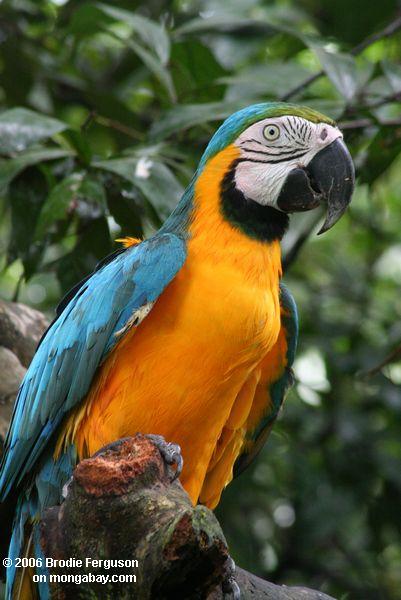
Owning a Blue and Gold Macaw Takes Your Time and Devotion


More and more people consider owning a Blue And Gold Macaw. The truth is only a very few should actually do it.

Simply pay attention to the numbers of Macaws being sold by private owners. Far to often people simply bite off far more than they can chew or don't understand the amount of time, dedication, work, commitment involved with owning a Macaw parrot.

It is likely the beauty, the out of this world colors, the affectionate/playful natures and overall intelligence of Macaw parrots that make these birds nearly irresistible for animal lovers.

To many people unfortunately buy on impulse when they buy one of these magnificent birds. Buying a Macaw is to often based on a delightful casual introduction and not any appreciable amount of before purchase research.

Properly trained, loving and intelligent Macaws are not something that just happens. That bird is the product of love, care, devotion, understanding and work. For those who own and love the Macaws, it may be the most gratifying work but it is work none the less.

The work begins with reputable dedicated breeders hand feeding and socializing the chicks. After purchase that socialization must be a continuing process. Breeder commitment and dedication is the reason that hand fed babies make the best companions.

By hand feeding the babies the breeders instill humans as essential to the babies existence and as a natural and normal part of his flock. This makes humans a recognizable part of the birds family.

It takes a real expert to tame a Macaw Blue And Gold or other that is not a hand fed chick. Most of those will just never become as loving, gentle and happy to be a part of the family as will the hand fed bird. The first step in socializing any large companion bird is hand feeding the chicks.

Personal attention by the breeders goes a very long way, helping to insure anyone willing to continue the process will likely continue to have a good natured, trainable and loving bird.

Unfortunately most or too many prospective owners do not fully grasp the importance of continuing the socialization process initiated by the breeder. So having a great deal of time and even more desire to continue the process is mandatory before anyone should buy a Macaw.

With large birds like the Blue And Gold Macaw the socialization process must be ongoing for life. Left alone to fend on their own Macaws can easily revert. They may become far more wild than a loving, gentle companion.

Left alone to long and or to often the Macaw can easily lose any interest in being that lovable bird and companion you first purchased. He can become that feather plucking, aggressive, extraordinarily loud and destructive bird he is quite capable of becoming.

Done correctly owning a Macaw parrot is every bit as gratifying as owning any other pet, for me it is more. I can think of no other pet that will bond closer or for as long as the Macaw or other large parrots.

For me and maybe because Macaws are not domesticated animals bonding is of a more personal nature. Perhaps it is the sole fact that the Macaws are not domesticated that makes bonding so very remarkable and heartfelt.

The Blue And Gold Macaw is not for the casual pet owner. If lacking the time, dedication and commitment to supply a his needs the Macaw is not a good choice. The Blue And Gold Macaw almost demands you spend your time and that you provide him not just physical care but emotional support also. He can be almost maniacal in his need of your attentions but can be just as maniacal when it comes to showing and giving his affection to those within his flock.

Primarily due to his loving and friendly nature. It's seldom that a Blue And Gold Macaw will prefer to be left alone. A well socialized Macaw will want to be included in everything you do. Most of the time A Blue And Gold Macaw simply wants to be with you helping to do whatever you're doing. He can't help it. It's his nature.

Without a doubt it is your time, your caring, your devotion and understanding that allow a Macaw to become such an amazing companion. He easily becomes just another beautiful bird without your commitment.

Because owning a Macaw means giving so much of yourself. It is unlikely to ever duplicate the experience with any other type of animal. Life with a Macaw becomes intensely personal and gratifying. The bonus is. The experience can last your lifetime.

The Beauty and Brain of the African Grey Parrot


The "Cadillac of Parrots" is definitely the African Grey Parrot, which it is referred to often among the parrot community. This beautiful parrot is adored for both its beauty and its brains. The African Grey not only has a mixture of beautiful colors they have a mixture of extensive words. Among the parrot family, the grey bird can learn the most extensive vocabulary. Aside from their extensive vocabulary, they are quite the entertainers, as they can learn to play toy instruments such as a baby piano and mimic sounds like the car motor, providing their owners much enjoyment.

The African Grey Parrot is intelligent, observant and focused. They can learn and teach themselves many things and are able to think in a cause-and-effect manner. Which, often times just as in a child, can result in a manipulation to the owner. It is important to train this parrot to ensure the happiness of the bird and that you are not faced with troublesome behavior. This bird has the strongest ability to bond with humans of birds in the bird kingdom.

Of the African Grey Parrot, there are two different families- the Congo African Grey and the Timneh African Grey, with the difference being their color. The Congo African Grey is distinguished through a lighter grey color with a red tail and the Timneh African Grey has a darker charcoal grey with a cherry-red tail. These parrots grow to 12 to 14 inches in size with a lifespan of up to 60 years of age. So, obviously, the African Grey Parrot is an addition to the home that will be among you for many years.

Because of their ever curious and intelligent personality, the gray bird needs the surroundings of an interesting and challenging environment. If you are unable to provide the parrot with a stimulating environment, you should not consider the parrot.

With such a highly intelligent nature comes the risk of stress and depression. This bird does run the risk of becoming stressed when all their needs are not provided. Signs that the birds are becoming stressed can be an eating disorder, picking at their feathers, attitude, or trouble behavior, such as chewing at cords.

This creature is a fast learner and requires attention and companionship. It is very easy to train this bird to perform tricks, and talk. Their vocabulary can actually become quite large, and they are capable of learning words on their own.

Although the bird does enjoy and need petting and affection, it is not a big admirer of overly endowment. This by no means ignores the bird, daily petting and affection is needed. Your home should provide this creature with much affection, compassion, enjoyment, training, and care. With proper care and love for the parrot, you should have a happy long companion in your pet.

Where to Start When Looking to Purchase a Parrot


Parrots have always held a special magic. With a humanistic personality- and eyes that can relate to you, the parrot has been admired in pet stores, story books, and in nature for centuries. Not only is the parrot beautiful with pastel and bright colors, they are intelligent, and they are one of the few animals in the animal kingdom that can talk- just another of their many wonderful qualities to admire.

If you have been considering purchasing a parrot it is necessary to purchase this bird that has had the proper introduction to life. Parrot breeders are the best place to begin. The parrot breeder is often a much better choice than a pet store, due to the fact that the parrot is receiving "specialized" parrot care with the surroundings and time spent just upon these birds instead of divided among many animals and the fact that a good parrot breeder will know much more about the birds needs and health requirements than the pet store often times.

Parrot breeders are the beginning introduction to the human in your future bird. Therefore, it is necessary to select a breeder that has the knowledge and has cared for your pet animals in the necessary manners. The parrot breeder should have provided an optimal diet of fresh fruits and vegetables, nuts and seeds, and pellets, a sanitary and safe environment, weaning between 10 to 12 weeks, an introduction to bathing when the birds feathers begin to develop, time to fly free each day, plenty of interaction and handling and love and affection, and how to diagnose and treat illnesses. These will provide your bird with the attributes that will ensure a quality pet.

When searching for a breeder, you should begin looking for a breeder that is close to home. Parrot breeders will be someone that you will want to depend on in the future, for when concerns arise and when you need support and advice. You will also want to ensure that the bird breeder is will to provide you with, and sign, a purchase / contract agreement.

These are all factors that will help ensure that the breeder is reputable. Discuss with your breeder how future needs will arise and what role they are willing to play in support. When you think you have found the "perfect parrot" visit this bird randomly before you purchase and make sure that the parrot is as fond of you as you are of him this is extremely important the parrot can live to 60 years old, and a relationship that "fits" is extremely important for the both of you. Select a parrot that is good with you, and select a parrot breeder that you are not only comfortable with, but you know has met the qualifications and cared for your parrot properly. With the right ingredients you will enjoy a long well-balanced life together.