Showing posts with label Arowana. Show all posts

Friday, January 14, 2011

Arowana Care: Weighing Whether or Not to Use Tank Substrate in Your Arowana


Most people do not like the idea of putting tanks substrate in their Arowana tank. This is because the presence of such will require additional efforts in terms of maintaining the tank. Considering the fact that Arowana tanks are generally big in size, this additional measure is a substantial undertaking. Tank substrates require such because it gathers toxic waste. Also, given the rate and manner in which these tanks are sullied by its occupants, the presence of substrates can aggravate the effect of a malfunction in the filtration system into proportions lethal to the Arowana.

The physical size of the Arowana tank, the filtering system, and the Arowana itself ultimately determine the frequency in which the tanks substrates will need to be cleaned. For example, if the filtration system is poor, toxic buildup occurs faster, hence the tank substrates need to be cleaner more often. As a general rule, vacuuming of the substrate needs to be done at least once every 10 days.

Is the extra trouble worth keeping the substrate? In answer, you should consider that it is very beneficial for the Arowana if you can give it a bottom reference point in the form of the tanks substrates. This is a common belief among many Arowana enthusiasts and is the reason why most of them undertake the extra work nevertheless.

A very good argument for keeping substrates in your Arowana tank is that it is the best option for giving a "bottom" for your pet fish. Extra work or not, it is healthy for the fish to have a bottom. In lieu of substrate, you may paint the lowest part of the outside of your tank. This method achieves the same goal as the substrate. However, in terms of the aesthetic schema, it is easy to change, replace, or remove the tank substrate while the paint option is irreversible.

Arowana Care: Test Your Arowana Tank Water


The Arowana is a prized fished that requires special attention especially in terms of water care. The unfortunate end of such a pet means not only moral turmoil for the owner but also the laying to waste of a considerable amount of investment. This is why any grower or owner of the Arowana should invest much effort in making sure that the Arowana tank is safe for the fish. The best way to do this is testing the water regularly. Ideally, testing should be done at least once a week.

This minimum requirement is based on the principle that the more times you check the water, the better chances you have catching an anomaly in time. This will enable you to solve or remedy these water problems before they adversely affect the Arowana. It is much preferable for any person to fix water conditions in the Arowana tank instead of having to remedy the resulting ailments in the fish later.

Before testing the water, you should know what to test for. Elements which are deemed to be harmless to us humans or negligible in other pets may prove to be quite detrimental for Arowanas. Ammonia, nitrate and nitrate are only a few elements to watch out for. You should also keep the temperature of the water in your Arowana tank constantly in check.

Fortunately for the Arowana enthusiasts, this task is made easier and cheaper by innovative manufacturers that have come up with test kits that test for these elements instantly. Now, constant checking is both easy in terms of time, effort and resources. You don't have to go to laboratories and wait for results anymore. The only thing you need to do is to keep these test kits in good condition. Follow the guidelines for storing these kits closely to get the most accurate results.

The Arowana fish is easy to keep, but hard to master when it comes to bringing out its best colors. Expose your Arowana's true colors using the simplest, laziest but most effective Arowana fish techniques.

Tuesday, October 19, 2010

Arowana - A Brief History Of The Arowana Fish


The arowana is a very old fish dating back to the Jurassic age which is roughly between 150-200 million years ago. The middle Jurassic age was known as "the Age of Reptiles" or dinosaurs as we know them, so this gives some indication of how old this fish actually is.

Through out this time the fish itself has remained almost the same making the arowana fish we see in or pet stores today a living fossil.

A lot of people either have or would like an arowana for a pet but they don't know or realise that this fish has become endangered. The fisher man and collectors don't realise that these fish are disappearing. The stocks of arowana have become very low over the last 50 years. The three main areas today where the fish is found, are Asia, Australia and the Amazon. Luckily owners and breeders of this fish from around the world are helping it to make a comeback.

An arowana in the right environment can grow to a size of around four foot and can weigh between 25-35 pounds. They are known as a fiery aggressive fish in the wild reaching speeds of 25 mph in quick shots to catch there prey. In the Amazon they can be seen leaping from the water to catch insects or small birds in low laying branches. This has earned them the nickname "water monkeys". They are classified as carnivores or meat eaters but will eat anything like other fish, insects or small birds.

In the wild arowanas travel, hunt and fight in groups. The male and female arowanas work in unity to defend there area and family group. To defend they nip, bite, body slap and charge at whatever puts them on high alert in there own territory.

In china the arowana is known as a symbol of wealth, luck, strength and power in the feng shui circles and is commonly referred to as the golden dragon fish. In this way the Asian arowana has become expensive and highly collectible.

Hopefully this will shed some light on the mystery and hype that surrounds this ancient bred of fish known as the arowana and hopefully will promote an interest in you to look into this great fish.

Wednesday, January 28, 2009

Arowana Introduction and Info


Arowana fishes has been known for many years. they are the king of tropical fish. Asian tropical fishes are very well liked and longed by all hobbyist so that the market price is stable and tend to increase over time. Why is This so? Beacuse arowanas are difficult to breed and one breeder can only produce 30 to 60 fishes and not all breeder will produce eggs. So there is thendency that demand is greater than supply. Furthermore, the natural environment that is required for breeding arowanans only exist in few Asian countries, mainly in Indonesia.

Is arowana still in their natural habitat? It is difficult to answer. If still exist, we migth not see them, because of its scarcity. Currently, arowanas can only be seen in the farm for breeding, some farms has produced up to F5 to avoid its extinction.

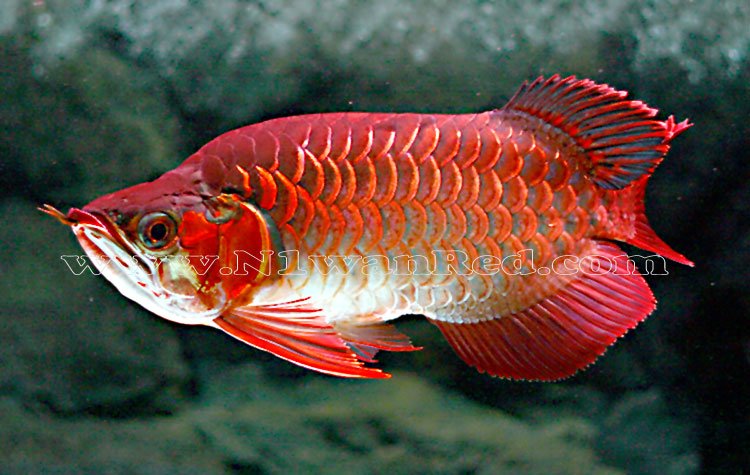
Arowana super red are originally from lake Sentarum, This lake flow into kapuas river located in West Borneo. There are a lot of arowana farms, small into big farms. Super red arowana is the hardest to breed outside its habitat. Golden Mahato arowana was originally from Siak river in Pekanbaru. It has gold color scales and at a glance is similar to Cross Back Golden Malaysia. These two are Indonesian arowana trademark, which are very sought after by all arowana fans in Indonesia and Worldwide.

Some Indonesian arowanas include super red, red tail golden, golden mahato, banjar red, and green arowana. Indonesian tropical climate is very suitable for arowana breeding. water is the most critical element in arowana breeding, water source is not a problem in Indonesia. Eg, there is kapuas river "The Natural Habitat Arowana" in Kalimantan and Riau, there are a few small river, so water source is widely available.

A few countries who are the main market for Indonesian arowana production : Japan, China, Thaiwan, Thailand, Singapore, Malaysian and Korea.

There is no doubt, arowana are Indonesia's pride that we have to preserve; as Indonesia is the biggest arowana produce in the world...