Showing posts with label Electric Dog Collar. Show all posts

Thursday, June 14, 2012

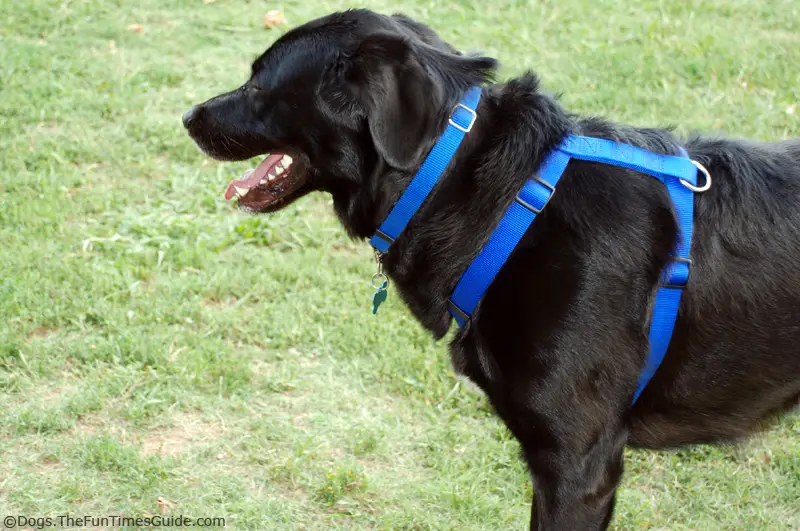
Dog Collar Vs Dog Harness: Which Is Best?


There are a lot of opinions flying around about which is the best method of controlling and training your dog. The dog collar, the dog harness and the halter are just some of the methods debated on. This is not intended to advise against one or the other but to point out a couple of things that should be taken into consideration before deciding.
To begin with, one benefit of the harness over the collar is that it is much harder for a dog to slip out of a harness than it is to slip a collar.
On the subject of walking and training your dog, some people swear by the harness for smaller dogs as they find they have much more control and can even lift the dog off the ground without harming the dogs fragile neck and spine. It should be kept in mind, however, that even though a harness may seem more gentle on a dog as it is not focusing all the stress on the neck, there have been reports of harnesses having a detrimental effect on some dogs, such as widening the chest, bolding the legs, and dislocations on some breeds of dogs, although these reports appear to be in the minority and seem to refer particularly to small dogs that pull. 
Larger dogs, particularly those that tend to pull constantly, can be harder to control with a harness than with a collar, and can end up taking the owner for a walk rather than the other way round, according to some large breed dog handlers. For this reason some long time large breed dog owners prefer to stick with the collar, however, there is the opinion that using a collar on a strong and constant puller can have detrimental effects on the dog's trachea, neck and spine. 
Another alternative is the halter harness. This finds favour with some owners of large pulling dogs, as it controls the head and, just as in leading a horse, controlling the head helps greatly in controlling the whole animal. 
There are other forms of collars, such as the choker, but I feel that you need to be extremely well informed and careful when using one of these. 
Whatever method you choose, your decision should be based on sound advice from professionals who have the welfare of your dog in mind. 
One more thing to bear in mind; whatever conclusion you may arrive at regarding the best way to train and walk your dog, it is hard to argue against using a dog harness when taking your dog in a car. You wear a seat belt to stop you flying through the windscreen in the event of a crash. Your dog will also become a living projectile in the same crash. Doesn't he deserve the same protection you have? 
To sum up: Whether you choose the collar or the harness, it is my opinion that thoughtful, gentle, yet thorough training in the early stages of your dogs life will lead to a happy and well-behaved dog that will not need drastic measures to be taken to control him in later life. 
I personally use a harness because I don't think I would like someone to throw a rope around my neck and yank me here and there.

Monday, May 3, 2010

Electronic Dog Fences - How They Work


Do you get complaints from your neighbours about your dog escaping? If a dog is left to wander it can create problems in the neighbourhood. Being caught by the ranger or causing a traffic hazard could be very costly. As the owner of the dog you are responsible.

It is therefore very important that every owner keeps their pet securely on their own property. Physical fencing of the area may not be practical in some homes and other residential surroundings and some can still get out.

So what about an electronic fence? Using a radio Pet Barrier has gained popularity due to their ease of use and operation and how effective they are at keeping a dog safe.

How Electronic Fences Work?

A radio fence uses a wire that runs along the perimeter of the area containing the dog. Mostly the wire can be attached to an existing fence or buried underground. A radio signal is projected some distance from the wire.

An electronic receiver placed in a dog collar is worn by the dog which produces a beep followed by a mild static pulse when it approaches the wire. On receiving the beep and static stimulation the dog is trained to withdraw from the boundary area. Boundary flags are often used to signal the 'No-Go' zone during the initial training.

This fencing method is less expensive than traditional fencing and can be installed by a professional who will also complete the necessary training. Even if the area is irregular and uneven the radio fence wire can be adjusted to suit the layout of the property. It is common to be able to leave gates open once it is trained correctly.

What You Need to Know Before Training?

To be successful with electronic fences, extra care should be taken to train the dog, you should discuss your property, your fences and your dog's personality with an experienced fence provider. Incorrect selection or poor training could see your efforts and investment go to waste. The training should begin step by step so that the dog learns how to behave correctly at the boundary.

Train Using Low Stimulation First:

It is essential that low levels of stimulation are used during the training process. Using high levels initially, may result in fear and insecurity in the dog. Over doing it could create a 'Porch Sitter' where the dog sits at the back door too frightened and scared to enter the yard or area where dog fencing has been erected.

The dog collar (receiver collar) should have adjustable levels to start the electronic stimulation at a comfortable level and increase slowly. A dog that is scared of the radio Pet Barrier is more likely to rush through the system in a fear based response. Low levels help the dog understand the new boundary and make their own decision to stay inside the radio dog fence boundary.

The boundary line can be marked with small flags in order to teach the dog to stay inside the 'safe zone'. Only audible beeps should be applied for a few days, the trainer can just alert the dog to a safe withdrawal on hearing the beeps.

After a few days, the static stimulation the dog feels can be gradually increased through the adjustable levels on the receiver. Pretty soon the dog will be refusing to go past the boundary flags, a result that can be rewarded. Taking it slow helps the dog understand the boundary and prevents any run through. It is unwise to rely on the static stimulation; the training is crucial. The Flags can be removed at a later date.

After each training session the dog should be praised for his good behavior. It is better not to scold the dog as this approach may make the dog scared of the training area. The dogs should be monitored for a few days even after the training before leaving them alone in the yard with electric fencing or radio dog fencing.

Seek the advice of a professional before making a selection on the Pet barrier you need. Your dog's safety depends on it.

Sunday, May 3, 2009

Shocking Dogs - Electronic Dog Collars


So, you have a dog with behavior issues. You've tried everything, but nothing has worked to keep your pooch from chewing the furniture or hosting doggy parties when you're not home. You may have heard about electronic training collars, and you are wondering if this might be the answer. You may figure that an electronic collar may do a better job of getting your dogs attention and making a lasting impression. Before you invest in this training technique, there are some things you should know.

There are different types of electronic training collars. One type is a bark collar. As the name suggests, it is used to stop a dog from constant, inappropriate barking. This collar is triggered by the dogs bark. It works by either a vibration or a sound that is felt or heard by the dog the instant the barking starts. It can be set to different levels and responds only to your dogs bark. There are also bark collars that work by spraying an unpleasant spray towards the dogs face as soon as he starts barking.

The other type of electronic dog training collar is the behavior correction collar. These training collars are designed to stop unwanted behaviors, including, digging, jumping, and running away. They work by a remote control held by the owner or trainer. When the dog starts the unwanted behavior, the trainer pushes the button to activate an electric shock. There are multiple levels available depending upon how well the pooch responds. The idea with these collars is, because they are operated by remote control, the dog will not realize you are issuing the correction, therefore, you do not look like the bad guy. A disadvantage to this type of collar is that you have to be with the dog in order for the correction to be made.

Although the technology and safety of electronic dog collars has improved over the years, they are still a controversial method for training. Many experts believe even difficult to train dogs can learn without the use of a physical correction. Apparently, if you are careful not to set the shock level too high, the collars are not painful, just uncomfortable. I'm sure you can find as many people for this type of training as opposed. I would not want to use an electronic training collar on my dogs, but it is a personal choice, and not for me to judge.

Sunday, February 15, 2009

Electric Dog Collars - Is This the Answer For Your Dog?


If you are reading this report then you have either considered an electric dog collar for your dog or maybe a friend or family member. Usually if you are at this point you are at a loss in your dog training and feel an electronic dog collar is the best answer. I am a professional dog trainer and I highly recommend them, however, before you jump in and buy you must first know what behavior you plan to train and speak to a professional dog trainer to determine if an electronic dog collar will help to train your canine friend.

Electronic collars are meant to be helpful in being more humane than a choke collar in that the dog's neck and windpipe are not being yanked on continually. Also, in training the electronic collar is not meant to be a torture device for your dog. It has very low levels to higher levels and there are reasons for using all of these but not in every dog. Most dogs can easily be trained with a very low level and you could hold the collar in your hand and feel the slight pulse of static shock the level in which you train emits so you know that the dog is not being hurt.

The best thing you can do is obtain a training DVD using the dog collar because the biggest mistake most dog owners will do is slap the collar on and start pushing the buttons when the dog does not do something you want him to do.

My first recommendation to you is to do basic obedience with your dog before obtaining an electric collar. Your dog needs to understand sit, down and come first. Once your dog understands these commands in a beginning sense you can add the electric collar only using it while on leash and tapping the button when you give the command instead of snapping the leash and collar. This will let him know the sensation he feels is coming from you and because you are training. If he doesn't have direction with the leash and a command from you when he feels the static shock your dog may think he is being stung by a bee.