Thursday, June 14, 2012

Simple Tips To Help You Choose The Right Kittens For Sale


Twenty years is a very long time and very few people can live with the same person or animal for so long. Twenty years, what am I talking about? This is the expected lifespan of a cat. While these animals are not loved by many people, kittens for sale happens to be so sweet and cuddly and this happens to be the reason why many people make the wrong decision when choosing a lifelong partner. The deception only becomes clear after a few months when these furry little creatures begin to grow and their owners learn about their own little ways and personal behavior. Never be deceived by the way a kitten looks and some of the things you think about when purchasing puppies for sale comes into play when you are thinking to buy a kitten. 
Kittens for sale and how to choose the right one 
When buying a kitten, many people focus on one thing and one thing alone and that is how adorable and fluffy the kitten is. While this method can be used, if you are going to choose a kitten based on its outward appearance, you will need to do some things in order for you to maintain that beauty. A Moggy, for instance, requires daily brushing and grooming to keep them looking beautiful and it is advised that you only invest in one of these cats if you have the time to brush them on a daily basis. While you can choose kittens for sale base on their look, it is strongly advised that you do not because you cannot tell what traits they will have simply by looking on them. 
Once you have overlooked a kitten's outward appearance, you need to think about the environment that you will have the cat living in. Did you know that aggression in cats oftentimes come from the environment that they live in? Hard to believe but true; a gentle, friendly cat can inherit its genes from its mother or father but in most cases, these cats are the way they are because they grow around soft gentle people. When looking for kittens for sale, it is best to go with ones that have been in a situation where over four people have had a hand in their life thus far. 
This tip is recommended because kittens need to interact with a number of people in order for them to be friendly. If the kitten that you are buying has only been socialized with one or two humans, it will be very hard breaking it otherwise because the first two to seven weeks are the most crucial period in every cat's life. During this period, kittens learn most of their traits that will take them through the duration of their life.
When choosing kittens for sale, it is crucial that you take your household and lifestyle into consideration. Kittens that are confident and very outgoing will settle well in busy households and large families. Take your other family members into consideration as well and if you have children and other pets, keep in mind that it will take some time for the kittens to get use to them; therefore, you will need to be patient and gentle with your new kittens.

Canine Addison's Disease


Did you just get back from the veterinarian with a diagnosis that your dog has Canine Addison's disease? Did you say, "What in the world is that?" Maybe he even explained, but you're still unsure of what this diagnosis means to you and your pet. In this article you will see that, while dangerous, this condition can be treated and your pet can enjoy a long and healthy life.
Canine Addison's disease, also known as canine hypoadrenocorticism, is a condition in which the adrenal gland does not produce sufficient amounts of hormones. This is seen especially in case of dogs. Glucocorticoids and mineralocorticoids are the two types of hormones deficient with Addison's disease. Glucocorticoids (cortisol) regulates numerous systems in the body and deals with stress. Potassium and sodium are regulated by mineralocorticoids (aldosterone).

Some of the common signs and symptoms of this disease include 
- anorexia or weight loss 
- diarrhea or constipation. 
- more water consumption and urination.
- lack of appetite and lethargy. 
- low blood pressure, slow heart beat. 
- vomiting and muscle weakness. 
- hyperpigmentation. 


Symptoms way worsen during different times, but when left undiagnosed and improperly treated, it causes a severe health crisis. Primary confirmation of the Addison's disease is done by laboratory analysis which includes a complete blood count, serum cortisol concentration and serum chemistry profile. Common hematological findings with the disease includes lymphocytosis and eosinophilia. Addison's disease can be diagnosed by a series of blood tests. Adrenocorticotropic hormone stimulation test will give a definitive diagnosis for the disease. This test measures the levels of cortisol in two blood samples, before and after stimulation.
Electrolyte levels are to be monitored through the course of treatment. Treatment includes replacement of glucocorticoid and mineralocorticoid steroids. Supplementation of drugs include prednisone or prednisolone (glcocorticoid) and Percorten-V or Florinef (mineralocorticoid). Dogs with this disease are more prone to urinary tract infections which includes small volume urination, blood in the urine is not very common. 
The most concerned complications of Addison's disease include an Addisonian crisis. This may be due to environmental or emotional crisis. During this condition, the dog has to be hospitalized and given high doses of intravenous fluids and glucocorticoids to prevent dehydration and collapse. With the proper management and medication dogs with this disease can have a normal lifespan.

Dog Collar Vs Dog Harness: Which Is Best?


There are a lot of opinions flying around about which is the best method of controlling and training your dog. The dog collar, the dog harness and the halter are just some of the methods debated on. This is not intended to advise against one or the other but to point out a couple of things that should be taken into consideration before deciding.
To begin with, one benefit of the harness over the collar is that it is much harder for a dog to slip out of a harness than it is to slip a collar.
On the subject of walking and training your dog, some people swear by the harness for smaller dogs as they find they have much more control and can even lift the dog off the ground without harming the dogs fragile neck and spine. It should be kept in mind, however, that even though a harness may seem more gentle on a dog as it is not focusing all the stress on the neck, there have been reports of harnesses having a detrimental effect on some dogs, such as widening the chest, bolding the legs, and dislocations on some breeds of dogs, although these reports appear to be in the minority and seem to refer particularly to small dogs that pull. 
Larger dogs, particularly those that tend to pull constantly, can be harder to control with a harness than with a collar, and can end up taking the owner for a walk rather than the other way round, according to some large breed dog handlers. For this reason some long time large breed dog owners prefer to stick with the collar, however, there is the opinion that using a collar on a strong and constant puller can have detrimental effects on the dog's trachea, neck and spine. 
Another alternative is the halter harness. This finds favour with some owners of large pulling dogs, as it controls the head and, just as in leading a horse, controlling the head helps greatly in controlling the whole animal. 
There are other forms of collars, such as the choker, but I feel that you need to be extremely well informed and careful when using one of these. 
Whatever method you choose, your decision should be based on sound advice from professionals who have the welfare of your dog in mind. 
One more thing to bear in mind; whatever conclusion you may arrive at regarding the best way to train and walk your dog, it is hard to argue against using a dog harness when taking your dog in a car. You wear a seat belt to stop you flying through the windscreen in the event of a crash. Your dog will also become a living projectile in the same crash. Doesn't he deserve the same protection you have? 
To sum up: Whether you choose the collar or the harness, it is my opinion that thoughtful, gentle, yet thorough training in the early stages of your dogs life will lead to a happy and well-behaved dog that will not need drastic measures to be taken to control him in later life. 
I personally use a harness because I don't think I would like someone to throw a rope around my neck and yank me here and there.

Tuesday, June 12, 2012

For the Sake of Your Bunny, Make Yours an Indoor Pet!


There is a common misconception that pet rabbits belong in an enclosure outdoors, rather than indoors and this often results in neglected, aggressive and ultimately, a rabbit with a much shorter lifespan. If you want to purchase a rabbit for yourself or your child but insist on leaving it outdoors, this is a very good sign that a rabbit may not the best choice for you. There are several reasons for this.
When an animal rescue team receives a call from Animal Control or an individual concerned about rabbit neglect, over 90% of those calls are to save an outdoor bunny. We are expected to remove a rabbit the owner no longer can take care of properly and since it has lived outdoors for the duration of its life, it is usually too aggressive to place in a home or overcrowded shelter. It is wild in the sense it has not had much human interaction simply because it is too easy to ignore or neglect an animal you rarely see (except when you trudge outside to feed it). On the other hand, it is not truly wild because it cannot do anything a wild rabbit could do. It can't run for cover from predators, forage or instinctively protect itself the way a wild rabbit can do. 
It is impossible to discuss rabbits in any environment without mentioning child owners* because they are often the ones expected to care for what is not a starter pet. A bite from a rabbit that has been left outdoors with little stimulation or interaction, constantly fearful of nearby prey is often a biting rabbit. If it is a large rabbit (generally more than 6 pounds), a bite on small fingers very often requires stitches or medical attention. This is dangerous for everyone involved and sadly, the only recourse is to euthanize the aggressive rabbit. This is unfortunate because the bunny was often purchased by a parent who did very little research on rabbit ownership, but gave in to a child's pleas for a cute and cuddly bunny. This is very common when the animal was the result of an Easter purchase, as it tends to be an impulse buy as a result of watching too many candy commercials!* 
There are simply too many outdoor problems that can crop up that are easily missed because of the location of the cage. If the rabbit is outdoors and the adult or child grows bored with it, this is when we see frozen water dishes in the winter, forgotten feedings and other issues. In cold climates, water freezes within minutes and a rabbit will not get enough liquid from snow that made its way into the enclosure. In fact, if snow does actually make it into the hutch, that is a telltale sign there is not adequate protection from the elements. Any veterinarian can recount a multitude of stories of rabbits dying from renal failure or dehydration/hypothermia due to lack of fresh water. 
Never is the saying, "when a parent considers a pet for a young child, they should do so with the understanding it will eventually be mom and dad's responsibility to care for it", more true than when the pet is an outdoor rabbit. 
Rabbit owners who choose to leave their rabbit outdoors often know very little about their pet and by the time it is very ill, it is often too late to get proper medical care. Because a rabbit is a prey animal, its instinct is to hunker down and suffer silently so predators can't sense the injured or ill animal. A rabbit is always cognizant of its precarious place on the food chain. When in a physical crisis, buns will seek cover to hide from predators, hunch up in a ball and often grind their teeth in response to the pain (this is often excruciating if it is an intestinal blockage) and wait for the crisis to pass.
If the bunny is indoors, subtle signs of pain can be noted because an indoor rabbit is noticed by its owner more often due to simple logistics. Medical care can be given before it is too late. If you are used to walking by the rabbit cage and seeing your bun excitedly hop over to see you (as mine does), it is going to catch your attention pretty quickly if one day you find the poor fellow hunched over in the corner of the cage. How is this level of rabbit behavior noticeable with a rabbit in the backyard in a hutch? 
A rabbit does not need to come into direct contact with a predator to perish. When a cat, dog, hawk or fox is in the area, a bunny in an elevated hutch will often thrash about to get away from the predator, often fatally injuring himself in the process. If the thrashing about does not kill her, unrelenting fear (perceived or real) night after night will often cause shock set in and the rabbit will literally die from fear. Signs of shock in a rabbit are the following: Pale gums, very cool ears, glassy or closed eyes, weak pulse, increased rate of breathing and increased heart rate. Immediate transport to a vet clinic is crucial but almost always too late. An indoor rabbit will rarely encounter these traumas. 
Well meaning outdoor rabbit owners are uneducated if they believe an outdoor hutch is mimicking a natural living experience. However, if you simply will not bring your rabbit indoors, please make certain it is not in one of the standard hutches pet stores sell, as these are never large enough. One of our volunteers at the rabbit rescue took 3 abandoned rabbits and could not bring them indoors. She put them in the shed (think plenty of space) and with plenty of hay, ample hiding spaces and the own company of each other, these rabbits had long and happy lives. Her creativity and determination to keep them safe was commendable and she ALWAYS brought them indoors during the New England winter months or during heat waves. It wasn't ideal (they belong indoors all year), but she did not have a choice, as the poor bunnies were abandoned and she was saving them. 
That brings me to another crucial point. If you still insist on keeping your rabbit outdoors, be absolutely certain it is not alone without a companion. Rabbits are very smart and social creatures. Leaving it alone outside without interaction is truly a cruel fate. If they sense predators or get cold in cold weather, at least they can huddle together. However, if you do not have a shed-size shelter for your buns to feel safe, why do this to the animal in the first place? Keep the little guy indoors already!
Rabbits are easily litterbox trained and often do well with cats. My very large rabbit sleeps with both of my cats and in the two years I have enjoyed Bonsai, I have yet to see him urinate outside his litterbox. His room is odor free and to be honest, cats and dogs can be often be considerably dirtier. When he was rescued, he was left in a hutch by the owner who moved and left him to die. A neighbor called to report animal abandonment when the individual moved out and the bunny was left. It is important to note that animal cruelty is a felony in many states.
He was aggressive, bit the rescue workers and lunged at everyone (who could blame him?). His water bowl was completely dry. It was understood it would be most likely euthanized due to trauma, severe head tilt and maggots. The animal was in a horrible state and the beginning stages of shock. 
I took him home and a vet donated his time and medical care. Within the week he was following me around, nuzzling me or lounging on my living room sofa with a carrot. He has never come close to biting or lunging at me from day one. He chases visitors around until they pet him and can't get enough attention. He absolutely loves people and like clockwork, turns his head down for his nightly kiss on the forehead. Then, Bonsai turns and happily hops away, mission accomplished. In short, he was shown he is noticed. He matters enough to be made to feel safe. 
The common assertion, "Rabbits belong outdoors" is simply incorrect if your bunny is meant to be a pet.

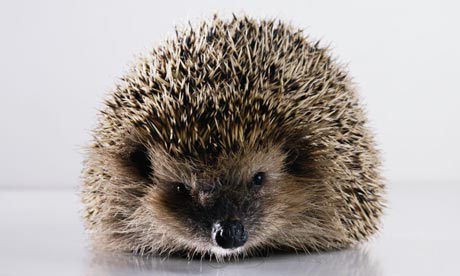
Exotic Hedgehogs As Pets


Hedgehogs as pets can be entertaining and endearing, but if you want to make the most of caring for one of these fascinating rodents, you should inform yourself of their living requirements.
Feral hedgehogs can and do cover several miles in a single night in search of a good meal. You pet hedgehog will not have to worry about catching its food, but without the opportunity for exercise, it can easily grow obese for its species and develop health complications. For this reason, you should invest in some stimulating features and toys. An activity wheel will keep your hedgehog going for hours each night, providing it with a much-needed workout. Despite its modest size, a hedgehog will need a spacious environment, which means at least two square meters of cage space. If it is social, you may want to let it wander around a room or two of your home, under proper supervision, of course. Its cage should be its castle, and at least two square meters will be required to house all its needs and facilities efficiently. 
Hedgehogs identify strange substances and items by tasting them. This habit can take on dangerous proportions when it involves cleansing chemicals or electric wires. If you allow your hedgehog some time out of its cage, do keep an eye on the situation, if you have cats, dogs or other pets that might threaten it. Although a hedgehog has excellent armor against potential predators, it might experience some anxiety. If you want different types of pets to get along, you will need to invest some time towards integrating them. Do not let the hedgehog roam through the whole house at once. This type of pet is quite gifted at sheltering out of sight, and may cost you hours of searching from room to room. 
Your hedgehog will need a well-ventilated living area to get rid of the smell of its droppings and for this a wire cage is best. Bear in mind, though, that in the wild, hedgehogs often retreat to a hole or some form of shelter for their daytime sleep. You should provide it with a box, a tiny sleeping bag or some blanket to let it creep out of sight. The bottom of the cage should be solid, to avoid injury. Set aside some space to accommodate a litter box as well. 
If you plan and prepare ahead of time for the arrival of your prickly animal companion, you will be making the most of keeping hedgehogs as pets.