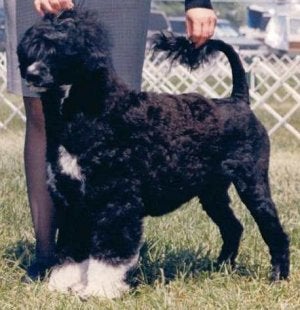
Descriptions :
The Portuguese Water Dog is a hardy, muscular, medium-sized dog. The coat varies from flat, wavy, shiny type to a thick, open curl, to a tight curl. Two coat clips are used: One clip with the face and rear shaved, and the working retriever or pet clip where the dog is scissored so the coat appears to be about an inch long all over. The single-layered, non-shedding, virtually hypo-allergenic coat comes in black, white or brown, parti-color (white with dark spots), black or brown with white markings, or even silver fox or gray. The body is slightly longer than it is tall; solid and sturdy. The topline should be straight and level. The brisket should reach the elbows, and chest should be broad. The head is large and broad on top with a pronounced stop occiput. The top of the skull should appear rounded. The heart-shaped ears hang down beside the head, but should not hang beyond the lower jaw. The eyes are dark and the teeth meet in a scissors or level bite. The tail starts out thick near the body, then tapers. The legs are very straight, strong and parallel. It has more webbing between the toes than many other breeds, which aids in swimming.
Temperament :
The Portuguese Water Dog is a water-loving, lively but sensible, and loyal dog. Affectionate and fun to be around. It is excellent with children and usually gets along with other dogs and pets without any problems. They need to get to know cats so that the company of them will also cause no problems. It has a stable, pleasant temperament. Brave, highly intelligent and trainable; keen to work and quick to learn and understand instructions. Training these dogs is not difficult if you understand the dog's character. They are very sensitive to the tone of your voice. Alternate training and play, and bear in mind that this extremely intelligent dog will take liberties if you think you can just fit a bit of training in when it suits you. Make sure you are consistent, firm and confident in the way you handle the dog. This breed may out-think its owner! Generally willing to please, this is an obedient dog. Spirited, with great stamina, yet calm. Portuguese Water Dogs have a super sense of humor and love to be in the spotlight of attention. They make good watchdogs. They have a very good sense of smell. Suitable for agility skills trials and numerous other dog sports. Portuguese Water Dog puppies are notorious chewers. Be sure to provide them with things they are allowed to chew on. Dominance, barking, and indoor activity level varies greatly with the individual owners. Make sure you are this dog's firm, consistent, confident pack leader, providing daily mental and physical exercise.
Height:
Dogs 20-22 inches (50-57 cm.) Bitches 17-20 inches (43-52 cm.)
Weight:
Dogs 42-55 pounds (19-25 kg.) Bitches 35-49 pounds (16-22 kg.)
Health problems :
Some lines are prone to hip dysplasia and PRA. Breeding stock should be tested for GM-1 Storage Disease, a fatal nerve disease that appears when a puppy is six months old.
Living Condition :
The Portuguese Water Dog will be okay in an apartment if it is sufficiently exercised. It is moderately active indoors and a small yard will be sufficient. It can live outdoors in temperate climates, but would be much happier living close to its family and spending days in the yard.
Exercise :
The Portuguese Water Dog is an active dog with great stamina. It needs daily physical and mental exercise, which includes a daily, long, brisk walk or jog. This breed loves to swim and there is nothing they would love more than if you threw a stick or ball in water for it to retrieve. It will also enjoy a vigorous romp. They make excellent jogging companions.
Life expectancy :
About 10-14 years
Grooming :
The Portuguese Water dog should be brushed and combed regularly. Primarily coat type does not determine which trim they are put in. It is a personal preference. The lion trim is the traditional trim, and it had a specific purpose. The fishermen would shave the rear and muzzle to aid in swimming and working in the water. Long hair was left to help keep vital organs warmer and protect the dog from injury on the main body neck and head. This breed is good for allergic persons as the coat sheds little to no hair and is virtually hypo-allergenic. The coat grows more slowly than that of a poodle and does not require a frequent scissoring or clipping.
Origin :
Developed from working dogs brought by invaders and settlers to the Iberian Peninsula, the Portuguese Water Dog has aided Portuguese fisherman for many centuries. He herded and caught fish, carried messages between ships, retrieved anything that fell overboard, and guarded the catch and boats when in port. The dogs were valuable enough to be considered part of the crew and were given their share of both the fish and the money earned for the catch. Retired fisherman would often rent out their dogs to bring in some extra money. Gradually technology replaced the Portuguese Water Dog. Radios sent messages and winches pulled the nets. By the 1930's the breed was almost gone. Luckily, a wealthy shipping tycoon, Vasco Bensaude, took an interest in the Portuguese Water Dog and set out to gather fine specimens and start a breeding program. United States interest in the Portuguese Water Dog began in 1958 with the importation of the first pair. The Portuguese Water Dog Club of America was formed in 1972 and the breed was accepted for AKC registration in the early 1980's. In the United States, the highly intelligent Portuguese Water Dog is primarily a companion dog, but also excels at water trials, obedience, agility, and as a therapy dog and assistance dog.
