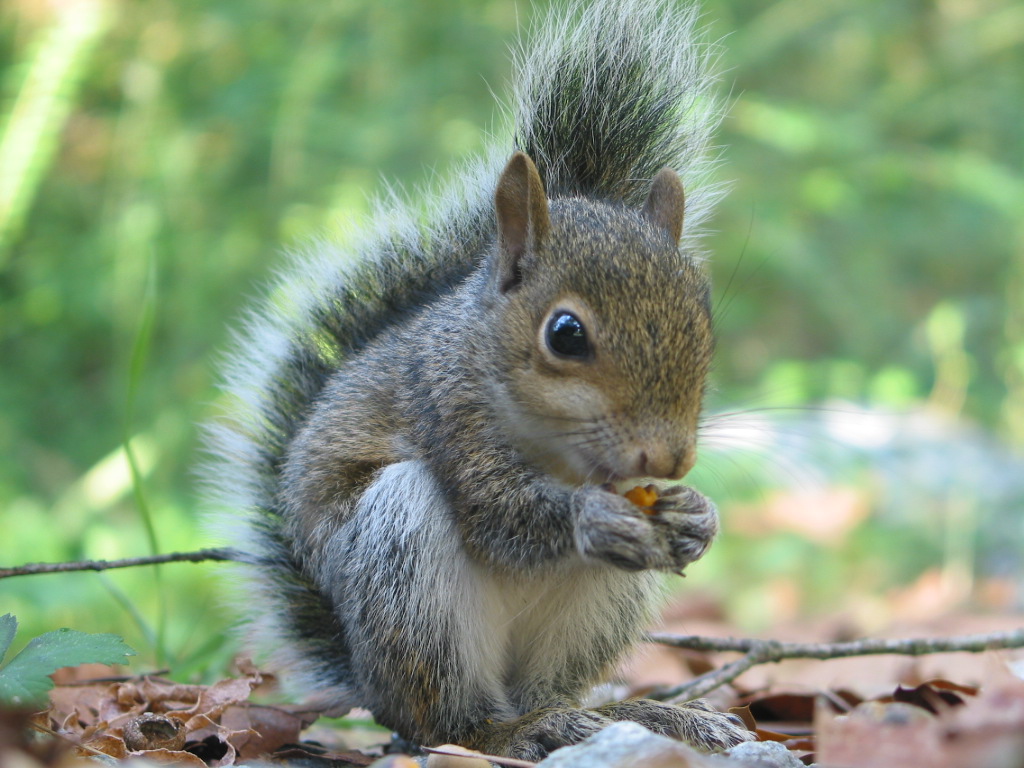
As much as I love squirrels, the harsh reality is that squirrels are at the bottom of the food chain. The only thing lower is the occasional insect or grub worm that a squirrel will eat. Other animals depend on the squirrel to make up part of their diet. Therefore, it's vitally important that the squirrel population be as healthy as possible. This fact is becoming even more critical as more predatory animals expand their range. Here in Ohio, the coyote could only be found in our Zoos 20 years ago. Today, coyotes have a growing population in all 88 counties. This puts a tremendous strain on the rabbit and squirrels population, that is felt all the way up the food chain! Limited numbers of game animals, such as squirrels and rabbits, will limit the ability of hawks and eagles to thrive.
Good squirrel nutrition translates into good hawk and eagle nutrition. We live in a cause and effect world. If you spray toxins on the ground, rivers become polluted and fish die. People who eat only fast food often develope problems with obesity or heart disease. The same is true with feeding squirrels. If you feed them junk food, they do not stay healthy and they become an unhealthy food for other animals.
Squirrels are like little children in many ways. They will eat almost anything as long as it tastes good. Just because a squirrel like to eat something doesn't mean it's good for them. Two common items people tend to feed squirrels are field corn and peanuts. Neither of these items are natural foods for squirrels unless they happen to live by a corn field or a peanut farm. Both have very poor nutritional value for squirrels, yet both carry a very high possibility of poisoning the squirrel. When corn or peanuts get wet, they become an ideal medium for growing Aspergillus Flavus, or Aflatoxin. Aflatoxin is a carcinogenic, (cancer causing,) mycotoxin that will attack a squirrel's liver and kill them.
Squirrels are herbivores, which means that their diet should mainly consist of vegetables. To keep squirrels as healthy as possible, they should only eat high quality vegetables, seeds, nuts and small quantities of fruit. When squirrels are in the wild and away from humans, they will naturally seek out these items. The problem comes when they depend on humans for most of their daily diet. If humans feed them peanuts and corn only, it's equivalent to taking them to a fast food restaurant, with the distinct possibility of killing them. It becomes even more of a problem when one person tries to feed them right, while all their neighbors continue to feed them junk.
This problem is not insurmountable. There are now companies that specialize in Squirrel Nutrition! Some even provide you with easy and free recipes that make food and Squirrel supplements that squirrels really enjoy, yet provide the vital vegetables and nutrients that keep them tip top health. You only need to Google "Squirrel Nutrition," to find ways to start feeding your backyard friends the right way!
