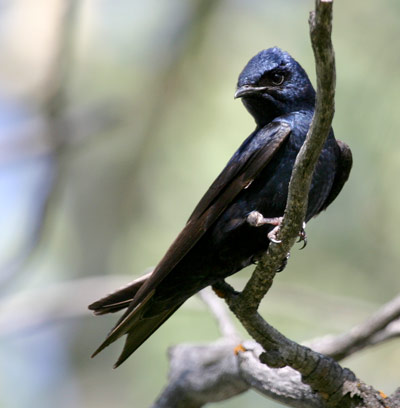
In North America alone there are over a million purple martin houses. Once you get a colony to nest at your site, they will return every year. That is as longs as you make sure that the houses are properly maintained. Many people who lose their colony often think that the birds died due to a pesticide or storms during the migration period. These birds do not commonly die from these particular issues. The most common reason for losing a colony of martins is the houses themselves. If the houses are not taken care of, then you risk losing the entire colony.
Attracting martins to your houses can be a little difficult for some. There are specific places that you can place your houses to help ensure that you will attract martins. Placing a house too close to a human home will deter a colony from nesting. The ideal distance to place housing for the birds is between 40 to 130 feet from all areas of human contact. You will also want to make sure that the purple martin house is placed around 50 feet from all trees. The martin likes for the house to be placed in an open area. Placing the houses in a clear, tree-free area will give you the best chance for nesting a colony of birds for the breeding season.
A common problem among those who are trying to nest purple martins are other birds taking over the houses. If other birds are allowed to nest in these houses first, then the martins are not likely to stay around. All birds, especially House Swallows and European Starlings, are territorial and will lay claim on their nesting grounds. These birds will chase away the purple martins, and you will most likely lose this particular colony for good.
Remember to keep your houses and gourds properly maintained and keep other species from nesting in them during the off seasons. Removing brush build up from around the houses will also allow you a more optimal chance of having a colony breed in your houses. You will also want to make sure that all your birdhouses or gourds are far enough away from human housing. Martins are very sensitive to their surroundings so you want to make sure you do your best to make your houses the best option to nest.
Showing posts with label Purple Martins. Show all posts
Monday, February 15, 2010
Saturday, January 2, 2010
The Best Birdhouses For Attracting Purple Martins
North American purple martins are fascinating little birds that can be a challenge to attract, but with a little research you can establish your own purple martin colony that will visit your backyard every year. Investing in a purple martin birdhouse is a fun project that with a little effort can reap great rewards.
Purple martins differentiate from other birds in that they need to roost in man-made birdhouses to produce off-spring. In addition, they are very particular in where they nest and have several deadly predators such as sparrows and starlings. These issues make starting and maintaining a martin colony pretty challenging. However, if you take a few extra steps in placing your birdhouse, your efforts can be greeted with success.
Martins migrate during the year, so the first step is to have a birdhouse available as soon as martins enter your particular climate zone. Do a little research to find out when martins generally enter your area. Adult martins typically nest in the same place every year, so if you are trying to start a new colony, it is last year's hatchlings that you will want to attract. Newly adult martins usually arrive a few weeks after their adult counterparts migrate to your area.
Birdhouse location is important when attracting and maintaining a purple martin colony. Martins prefer their birdhouse in a wide open space, away from your home, trees, or power lines that can aid natural predators from preying on your martins. However, be sure to keep your birdhouse in a visible location so you can enjoy watching your martins from your home.
Once you have found the perfect location, you can concentrate on finding the perfect birdhouse. Martin houses should have multiple compartments for nesting. Martins prefer birdhouses light in color and well ventilated. You can even go the extra mile and put clean straw in each compartment. Once you're martin house is up, you can provide nesting material such as pine needles, straw, and twigs to aid your martins in building their nests. A platform feeder in a nearby area will also help make for an inviting purple martin home.
Subscribe to:
Posts (Atom)