Showing posts with label Koi Pond. Show all posts

Saturday, January 29, 2011

How to Keep Your Koi Fish Pond Clear


One of the most asked questions I get from people who own Koi ponds, is "how to you keep your Koi pond so clear"? The very first thing that I ask them is how many fish do you have in your pond and how what is the size of your pond. Keeping a pond clear is really a many step process. I have listed a few suggestions below.

First you must keep your fish waste to a minimum using the rule of thumb that one 12 inch Koi per 100 gallons of water. Most people always have more fish than their pond can handle waste. The only other way that you can alleviate this problem is to make sure your pond has a bottom drain system. This means your pump is outside of the pond. A good bottom drain system will increase the flow of water which will cycle your water more per hour.

Another important part of the pond system is your filtration. Without good filtration the waste you pick up by your pump can end up right back in your pond. I am an advocate of bigger is better, and that is also true for your pond. Next time you visit your local pond store look at the pond filters; you will see 500, 750, 1000, meaning gallons of water they can handle. Why not purchase a pond filtration system that will handle 500 gallons more than the water in your pond. However, you always want to match your pump to the filter system you buy.

Now I am going to let you in on a little secret. I use a multi-stage filtration system and in the second to last stage I use lava rock. Lava rock is great for filtering out very small particles that may get by your mesh filters, thus making your pond even clearer! But, that is not my secret; my real secret is alfalfa. If you place a tightly woven amount of alfalfa into your Koi pond, you will be amazed of how it reacts to break down waste. I even have a small ball of alfalfa in my filter box.

Using these few ideas above you should be able to maintain a wonderful environment for your Koi fish. Now you know how to keep your Koi pond clean with healthy fish that you can enjoy for many years to come. This is how I learned about pond maintenance from other people who also want to enjoy their garden pond. Feel free to explore my other resources at my website listed below.
Tuesday, December 28, 2010

Origins and Different Meanings of Koi Fish Types


Koi fish meaning is the thing that people who own and breed koi fish seek because they want to believe that the koi fish means or symbolize something other than just being ornamental fish. They want to believe that caring for a Koi will bring them more than just satisfaction because it can mean something more.

For people who do not know much about the Koi fish, it is nothing but common wild carp with colored mutations. However, for people in the East, specifically in Japan, the Koi is more than just color mutated common carp. The common carp originated in China and was later on brought to different Asian countries such as Japan and Korea, and now they can be found all over the world. Over the years, since the conception of the Koi (more commonly known as the Nishikigoi in Japan), many beliefs, legends and myths have been told to explain the meaning of the Koi or what it represents.

Indeed there have been many stories that have been told about the Koi. According to Japanese myths and beliefs, the Koi can symbolize masculinity, prosperity or good fortune, perseverance during adversity and strength of purpose. In Chinese, a Koi symbolizes balance and harmony (yin and yang), courage and also good luck.

According to the most popular Japanese story about what the Koi fish symbolizes, if a Koi is able to swim up and against the current of a waterfall, at a point called Dragon Gate on a river called the Yellow River, it will transform into a dragon. Thus, explaining why the Koi fish symbolizes perseverance during adversity. The Koi fish is known to swim upstream, like that of the salmon, this perhaps best explains where this most common story about what it symbolizes have come from.

Masculinity is one of the things that a Koi is said to symbolize in Japanese Culture. Every year the Japanese hold an event they call Boys Day Festival where each son in a family participates in the form of a Koi shaped kite. The bigger the kite, the better. The Japanese consider the carp as one of the most energetic fish because it is constantly moving and motion is seen as a characteristic of that of a boy.

In Japanese culture, the Koi fish also symbolizes Family. A specific color represents a member of the family. For example, the black koi is for the father, the flame red koi is for the mother, the blue and white koi represents the son and the pink and red represents the daughter.

The colors of the Koi also have significant meanings. For example, the platinum or silver colored fish represents success in business and the gold koi represents wealth and prosperity.

Many people have taken up collecting different types of Koi as a hobby and most of them believe that the Koi brings good luck and wealth. This can be because a Koi fish can be very expensive, especially the ones that are deemed to be high quality; these kinds of Koi have perfect color markings.

A Koi can mean a lot of different thing but there are really no concrete meanings. All of these are based merely on myths and different beliefs of people. In the end, it is up to the person to decide what the Koi means for him.

Saturday, June 26, 2010

What is an Asagi Koi?


The Japanese is one of those famous people when it comes to breeding ornamental fish. Popular fishes that they keep are gold fish, carp, koi, and other tropical fish which are also popular, not only in Japan, but also around the world. The most common and popular is the koi keeping. At this present day, many people already engage their selves in keeping koi. This is also one reason why experts and breeders keep on producing different varieties of koi. They do the crossbreeding method to produce another different variety.

Now, if have you eaten or entered in a Japanese restaurant, you will always see that there are aquariums or ponds with different varieties of koi fish or carps. If they don't have aquariums, they have paintings and pictures of these fishes. Have you ever wonder why they have it? The answer is simple, it adds up to the decoration of the restaurant and at the same time it catches the eyes of the customers because of its beautiful colors. Another important factor why they have this is because they believe that it brings good luck to their business. They have symbolic meaning for this fish -- koi are symbol of love, friendship, and courage.

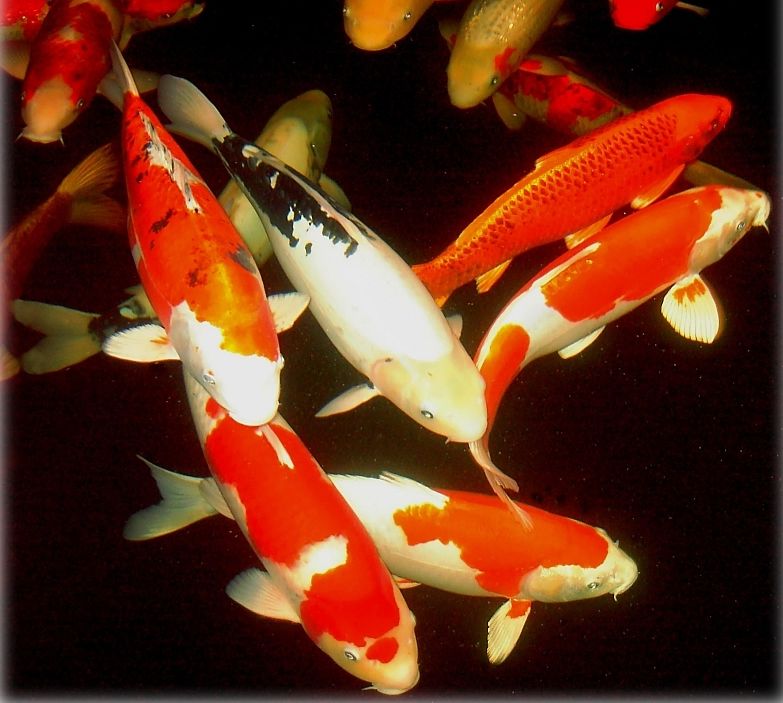
If you think that keeping koi fish will be easy, then I'm telling you it's somewhat challenging. As mentioned above, it comes in different varieties. Their variety varies with the color that they have in their body. One example is the Asagi koi which comes in blue or blue gray color with red lining on its side, belly and fins. This breed is one of the most common breeds that most keepers have.

Aside from Asagi koi, there are also other koi varieties like the Kohaku (one of the most common), Taisho Sanke, Bekko, Goromo, Matsuba Tancho, and Kawarimono (this breed is known to be unidentifiable when it comes to variety). It doesn't matter what variety you have, what I can assure you is no matter what you have, you will for sure enjoy keeping it. They can serve as your stress reliever.

Koi Pond Algae - How to Prevent Or Remove it For Good!


Before even constructing your garden fond fish, you must come up with a thorough planning and study on how to make adequately a pond and sensibly take care of your koi fish. Consider some points on how to go about some of the important details like how to construct effectively garden koi fish pond, what aquatic plant to grow, how to take care of your koi fish collection and many more.

Let me show you an adequate step on how to deal with in preventing and removing some of the most common concerns of removing koi pond algae. First, focus on the manner on which you construct your koi fish pond. This is very important to detect if your pond is prone to algae growth or not. Though algae normally exist on ponds, it should not be allowed to grow excessively or it will cause immense problems.

Ponds should be constructed in a way that is easy to clean and remove falling debris on sides, top of water and even in depth debris that settled down at the bottom of the pond. To resolve this concern, creating a slope going to one side so that all debris would settle in one place only is appropriate. It creates accessibility and convenience when cleaning. Make variations to the depths of your garden pond fish, perhaps you can have a 35-40% deepest area and another 25 to 30% second level and the rest leaves to the first level. You can have the depth at 1 1/2 to 2 feet.

Second is, try to choose or grow aquatic plants. Algae grows rapidly in waters with high nutrient value. With the presence of aquatic plants and other floating plants like water lilies, lettuce and others you can reduce nutrients. Moreover they can prevent sunlight from penetrating the pond thus reduce growth of algae.

Third, is to clean frequently your koi fish pond especially decaying leaves and debris which highly increases nutrition to algae if not given attention to. Manually remove this debris or use a skimmer in biological pond filters. In order also to minimize falling debris avoid planting trees that excessively gives out excessive debris. However, do not go greedy about not to plant trees near the garden pond. Remember their vital role on giving shelter to your koi and limiting sunlight to your koi fish pond.

Fourth, is to make use of Ultraviolet sterilizers. This is use to damage DNA structure suspended algae which make them clamp together, thus easier to clean. You may use chemical filters in removing it. These UV sterilizers get rid only to those harmful bacteria and micro-organisms making your water crystal clear again. This method is safe and immensely effective, and not to worry because it does not affect string algae in your koi pond.

Fifth, I greatly recommend the use of beneficial bacteria. Regular use can tremendously help in natural algae control which is true to all algae types. Beneficial bacteria can also help reduce water order and improve health of fish. To aid in the growth of this bacterium is by putting in or using rocks and stones as part of your decorative design of your koi pond fish. Having many rocks and stones will definitely aid in the growth of beneficial bacteria.

With these simple ideas I hope it will conspicuously help you in dealing with koi pond algae or better yet prevent rapid growth of algae in your koi fish pond.