Showing posts with label Food. Show all posts

Friday, July 15, 2011

Your Dog And Your BBQ Events


It's summer time and with it comes celebration. We always enjoy a good barbeque, and so can our canine friend. Visitors come over for the celebration and everyone enjoys a good meal. There are some dangers that you need to help your pup avoid though.

Always make sure the gates are closed.

Your yard needs to be secured so that your pup doesn't escape into the wilderness of the world. Make sure that all the gates are closed, and your pup is safe. As you begin to cook, keep in mind that matches and other items should be kept away from your pup. Matches may seem harmless in the paws of a dog, but they contain phosphorous which is deadly to them. Once lit, the grille will be hot and boiling grease will likely drip down.

Burns are another great danger.

Keep your pup away from this. They may smell the grease and want a taste, leading to burns as the hot liquid drips down onto them. Also be sure to keep any trash out of your pup's reach. Bones and plastic utensils can hurt a dog's insides, so be sure your canine friend does not have access to your garbage.

Harmful foods

As you enjoy your meal, it will be hard to keep your pup under control. They smell that good food, and can't always help themselves to want it. Inform your visitors not to feed your pup, as greasy and spicy foods can build up in their pancreas and may lead to an inflammation. Other foods to be very weary of are onions, avocados, grapes and raisins. These are very toxic for a dog, and you may end up at the vet's office. Most of all, don't give your pup alcohol. It may seem funny, but it is very bad for them. The alcohol can hurt their respiratory system and dehydrate them. Treat your pup like your child, keep an eye on them, and don't let them get into mischief.

Other dangers with common summer items

There are some other dangers that come with a cookout. Things like bug-spray and other insect repellant should be kept out of reach. This is especially true for candles that give off repelling fumes. Fireworks are also a danger to your pup. They may get excited and pounce on them, and the noise can often hurt their sensitive ears. During the day, the summer sun can kiss your pups nose, so you might consider applying a dog formulated sunscreen to protect your pup. At night, glow-in-the-dark jewelry is fun for the kids just don't let them leave it around for your pup to chew on. The chemicals within are poisonous. Take care not to leave any other items around that your pup might happen into. With all the family and friends around, it can be tough to keep up with what gets left on the ground, or in a place where your pup can get to.

Having a great holiday is important, but be aware that your pup may find mischief. Keep an eye on them and don't leave anything dangerous where they can reach. They are clever animals, and enjoy spending time with you. By keeping your pup safe from dangers, you can ensure a safe and happy barbeque for you and your four-legged friend.
Wednesday, February 2, 2011

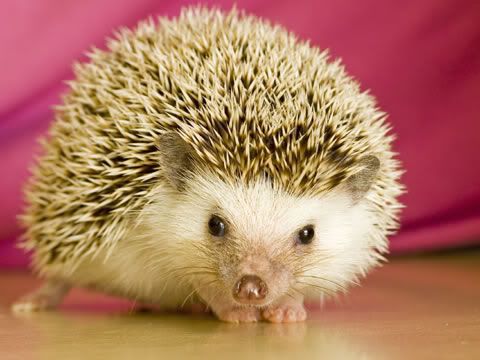
Can I Keep a Hedgehog As a Pet?


Hedgehogs are cute little creatures, their faces very appealing. Of course, they have spines too so they aren't exactly great for petting or stroking, but they certainly aren't dangerous like porcupines either.

Legal:
First off, let me stress that in most countries it is illegal to keep a wild hedgehogs as a pet, and many are considered to be endangered species. The wild variety are not tamed either, and you shouldn't attempt to pet or approach one. Many people do have hedgehogs as pets though - these are specially bred species called African Pygmy hedgehogs, are actually a genetic blend of many different smaller hedgehogs than the typical wild variety. From a young age they are handled so as to be tame.

Size:
Typical pet hedgehogs of the African Pygmy variety are around 20cm in length. When relaxed, the "quills" or spines of the hedgehogs are quite safe to touch, and will only erect if the hedgehog feels it is in danger somehow.

Choosing Your Pet:
When you go to choose your potential hedgehog, take time to carefully handle it and ensure it is tame. You may also feel a certain connection with one. Make sure the nose and eyes are clear of disease or blockage, and that it isn't overly obese or skinny.

First Steps:
When you get it home (use a cardboard box for transport with a towel at the bottom for comfort), make sure you have a cage or larger box for a few days until it is comfortable with the new environment.

After a few days to acclimatize itself, you should be able to pick it up. Don;t be discouraged if it rolls defensively into a ball at first, it may take a while longer until it is used to you personally. If you continue to hold it, it will naturally sense there is no danger and will relax before exploring your hands, and you.

Ideally you will have a cage to keep the animal in, at least a rabbit hut size. It will need a small nesting box to hide in, and a litter box that is kept away from the food and water.

Food:
Hedgehogs are known as "insectivores" which means, you guessed it - they like to eat insects. You should feed a balanced diet of various insects, pet food that is clearly marked as for hedgehogs, and small amounts of fruit. Your local pet store should be able to help you out with all these.

Tuesday, January 25, 2011

The River Murray Rainbow Fish


The River Murray Rainbow Fish, Melanotaenia fluviatilis,is one of the many types of Australian Rainbow fish. This group mainly a tropical and subtropical group of fishes, but this Fish's range extends into warm temperate areas and it is able to take quite low water temperatures.

Origin

The River Murray Rainbow Fish is endemic to Australia. As its name suggests it is found in the River Murray. It is also found in many but not all of the Murray's tributaries and several other river systems and lakes.

Size

They can reach 10 cm (4 inches long), but most are smaller than this. The males tend to be bigger than the females.

Temperature

Most of the articles on the internet about this Fish suggest that a temperature of between 22 and 26 degrees C is ideal for this species. My experience suggests otherwise. Although this is a very versatile fish which will certainly live healthily in an aquarium, being treated as if it were a tropical fish, the specimens with the best colour tend to be pond fish, subject to the natural rise and fall of temperature with the different seasons as well as the different weather.

Water Conditions

This fish is able to take a wide range of conditions. Most of the places it occurs naturally have a high pH and the water is quite hard. In an aquarium I suggest that the pH should be between 6.8 and 8. Excessively soft water is not ideal, but most tap waters will be of a suitable hardness. As with all fish, the Chlorine or Chloramine needs to be removed before it comes into contact with the fish.

Food

This is an omnivorous fish. Like many of its relatives it eats more plant material than most tropical fish. They will live on either Tropical or Goldfish food, but this should be supplemented with vegetable matter. Duckweed (Lemna species) is eaten very readily by this Fish. They also like many types of vegetable. I cook the harder vegetables enough to soften them. Zucchini are eaten as are cucumber, green peas and other vegetables. Like many fish they also relish insect larvae like mosquito larvae, small crustaceans like daphnia, and small worms. Our River Murray Rainbow Fish get frozen blood worms once a week as well as frozen brine shrimp once a week on a different day.

Sunday, January 16, 2011

Homemade Cat Food - Is Your Homemade Cat Food Balanced and Safe?


Feeding your cat homemade cat food is a good idea for the optimal health of your cat. However, that does not mean you can feed your cat any ol' thing and expect your cat to stay strong and healthy.

Cats, like humans, need to have a balanced diet in order to thrive to their optimal health and unfortunately many people do not realize this before they decide to give making homemade cat food a try.

Before you feed your cat things that you make, please make sure that you are doing your research. Look online for foods that are poisonous to your cat or better yet find a book that tells you how to make homemade cat food and how to make sure your cat is getting a balanced diet.

An example of something people would put in the food that is a big no-no is garlic. Garlic is poisonous to cats but since we tend to use a lot of garlic in our food we may never think twice about adding it to flavor our homemade food for the cat.

Another thing that is a big NO as far as feeding felines is tomatoes. Tomatoes are another poisonous thing we tend to want to give them.

Raw eggs are also something you should not feed them when you make homemade cat food because just like us they could indeed get salmonella. Because they are so small they have a much higher chance of dying from salmonella then we do.

You can not give your kitty raw dough. I don't know if that is something I would have considered giving my cat anyways but the reason they can't eat raw dough is because it could continue to rise in their stomachs thus causing major damage.

This is not a complete list but you get the idea. So between people feeding their felines things that are poisonous and not giving them a complete balanced meal, something wonderful like feeding cats homemade cat food has gotten a bad rap.

As I said before, feeding your cat homemade cat food is wonderful for your cat's health as long as you take the time to learn how to properly make the homemade cat food.