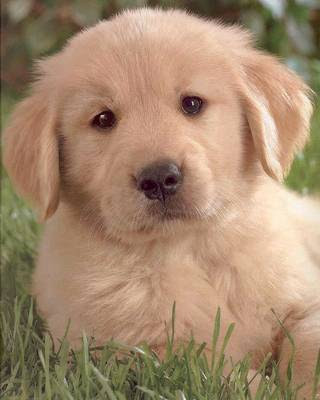
How to potty train a new puppy is perhaps one of the most frequently asked puppy training questions. To a new puppy owner, this can seem like an impossible problem. I have certainly cleaned up my share of puppy pee and pooh, and have lived the nightmare. However, I want to tell you right now, it does not have to be this way, and I'll show you how.
The real secret to potty training puppies, the secret that is right in front of your eyes is this. Now remember, please be aware that this you probably already know this, but you may not know that this is the secret.
The secret is routine. "Routine," in this case, means doing something the same way over and over again. In potty training your new puppy, routine and establishing the right routines is vitally important. The repetition of established routines followed by praise and possibly a treat is how puppies learn.
Routines for Potty Training Puppies
* Establish a fixed schedule for feeding.
* Let your puppy outside 10 to 15 minutes after meal times.
* Take your puppy outside every one to two hours.
* Always take your dog out just before bedtime.
* Always remember to give your puppy lots of praise when it eliminates outside.
* Always take your puppy outside when you see it sniffing the floor as if following a trail or if you see it preparing to eliminate.
* When your puppy goes inside, always scrub the spot as thoroughly as possible.
* Always put your puppy in a special area designated just for your puppy when you cannot be present to monitor it. This area should be big enough to allow the puppy a space for toilet use.
Repetition of your puppy training routines without change is key. Never scold or be angry with your dog. Simply carry out your training routines with gentle firmness, and you'll succeed not only in puppy potty training, but in showing your pet how to please you and forging a strong and long-lasting bond.
Shih tzus can live for up to 10 to 18 years but the range can vary depending on their health condition, activities and how they are being cared for. Some factors that can contribute to their health's deterioration are health issues. These health issues include:
Stenotic Nares.
This diease is common among dogs considered to be brachycephalic such as Shih Tzus. Brachycephalic dogs, also called snub-nosed dogs are dogs with short wide head and narrow nostrils. This physical attribute causes increased resistance to airflow through the mouth, nose and larynx and can later lead to respiratory difficulty and enlargement of the heart. Stenotic nares are present at birth to brachycephalic dogs but clinical signs of the disease usually begin until the pet is several years old.
Luxating Patella.
Smaller breed of dogs such as shih tzus are at risk of having this health problem. Luxating patella occurs when the kneecap, which is usually located at the center of the knee point, slides out of its grove. Although luxating patella is a congenital disease, the disease is sometimes acquired through trauma. Signs of this disease include lameness in the affected legs (rear), walking on three legs, holding affected leg up or extending it backward.
Cleft Palate.
Cleft palate is an opening or division in the middle of the palate (roof of the mouth). This health issue can be either a genetic disease or due to something that occured during the development of the embryo. Dogs with cleft palate cannot nurse and are at risk of getting sinusitis or pneumonia. Cleft puppies are often fed with bottle or tube since the can only mouth the nipple. Surgical procedure is needed to treat this problem.
Umbilical Hernia.
Umbilical hernias is characterized by protrusion at the navel. Small hernias are usually not a problem however, large ones should be repaired through surgical correction to prevent the risk of intestinal loop strangulation. This problem is said to be inherited but sometimes occurs when the umbilical rings fail to close fully after mating. The hernia appears as a soft abdominal mass at the area of the umbilicus. Intestinal strangulation exists when your dog is vomiting, depressed, anorexic, suffering from abdominal discomfort and the larger hernia sac are warm to the touch.
Hypothyroidism.
Hypothyroidism occurs when the thyroid stops producing and secreting thyroid hormones responsible for proper metabolism. Signs to watch for include lethargy, hair loss, weight gain, cold intolerance, slow heart rate, high blood cholesterol and anemia.
As a breed, Golden Retrievers require a minimum amount of regular grooming to remain clean and attractive. A little brushing, an occasional bath and a bit of trimming pretty much cover the needs of a Golden.
Grooming should begin while a dog is a puppy and should become routine. Some breeders clip puppy nails weekly until they go to their new homes. This teaches the puppy to accept having his nails clipped.
Some breeders also use a fine toothed comb daily to remove dirt from the coats. Mouths and baby teeth are checked to see how bites are developing, and ears are observed for cleanliness.
All of these preliminary steps taken by the breeder will help make grooming easier for the new owner as long as the process is continued.
Your Golden's ears will need weekly cleaning. Even if they do not appear dirty, frequent care will prevent ear problems. Ear cleaning solutions are available in pet stores. Place several drops in each ear and massage the ear for half a minute.
This way the solution can penetrate the greasy dirt. Let the dog shake his head to loosen the dirt. To actually remove the dirt, use cotton swabs or cotton balls. Clean the exterior areas of the inside of the ear, getting into the nooks and crannies of the outer ear.
A need for more frequent cleanings may require veterinary attention. We rarely think about the cleanliness of our dog's teeth, leaving that to the natural cleansing action of chewing.
However, dogs develop gum disease and tooth degeneration just like humans. We can help counter this progression by brushing the teeth regularly. Canine tooth paste and tooth brushes are available and can be used daily.
Dachshund, when translated into the English language, literally means "badger dog". Equipped with a great sense of smell, their original purpose was to track and kill land-burrowing animals. At present, some hunters still use this breed as such, but the majority of the population found another reason for owning the dog. They found out that it makes a great house pet. It is small, so it doesn't take up much space in any household regardless of size. The pooch, in general, has good nature. There are basically 3 size classifications for this breed, namely: toy, miniature, and standard - all of which are still relatively small.
Their height may vary from 5 to 18 inches. They may weigh 8 to 20 pounds, depending on the size classification it belongs to. It is short but muscular, with four strong legs supporting its torso. It holds its head high, giving it a dignified look. The ears of this dog are quite long, going down the sides of its face, reaching the upper part of its neck. Its fur is shiny and slick, which may come in a solid color or a combination of two. These colors usually include brown, tan, yellow, red, black, and gray. The dachshund's chest protrudes slightly, and its stomach is tucked in, making it look even more macho.
Aesthetically speaking it's considered by many to be a very cute dog. Difficulty in training might be experienced by the owners of this breed. It sometimes can be stubborn, especially if it wasn't acquired as a puppy. The best time to train this pooch is while it's still young - at this stage they haven't developed their hard-headed nature yet. As a puppy, they are like soft clay waiting to be molded. While teaching a pet, it is important not to be too hard on it, but have it know that you mean what you do and say. Show it that your in charge.
This breed loves eating, so use it to your advantage. Include doggy treats during sessions; give it as a reward for obeying commands. Giving it positive remarks for good behavior also helps motivate it to learn. Another thing that this pet loves is playing. Again, use it to your advantage - you may devise a method that makes the pets training sessions game-oriented as well. Having fun while learning is a great way to have things done. Food and fun can do wonders for this doggy. Therefore an ideal training program would be a game and food oriented yet firm session scheduled daily.
As for exercise, have it walk daily. It has loads of stamina for its size, do not underestimate its physical prowess. Feeding should be controlled, it loves being overfed. Don't give it anything more than it needs, or it will lose its figure and bloat, leading to other health problems. Some Dachshunds has the tendency to wander off while following trails, so you best keep a collar and leash on it while taking it out. This pet also likes digging, which some owners find annoying. Nothing to worry about though, the habit can be ridden of through training. Grooming it isn't hard, but it will solely depend on its coat type.
Other types will require more brushing and clipping than the others. Relatively easy though. This breed will make a fine pet for anybody.
What is a breed standard? A breed standard, a detailed description of an individual breed, is meant to portray the ideal specimen of that breed. This includes ideal structure, temperament, gait and type, all aspects of the dog.
Because the standard describes an ideal specimen, it is not based on any particular dog. It is a concept against which judges compare actual dogs and breeders strive to produce dogs. Ata dog show, the dog that wins is the one that comes closest, in the judge's opinion, to the standard for her breed.
The overall appearance of the Golden Retriever is described in the breed's official American Kennel Club breed standard, which was revised and adopted in 1982. The Golden should be an athletic dog whose overall attitude is as much a part of her being as any physical components.
It is important to keep in mind when reading the standard and trying to match one's own Golden to it that the standard describes an ideal Golden, and some sections are geared toward a show interpretation.
The American Kennel Club familiarly referred to as the AKC, it is a nonprofit organization devoted to the advancement of purebred dogs. The AKC maintains a registry of recognized breeds and adopts and enforces rules for the dog events including shows, obedience trials, field trials, hunting tests, lure coursing, herding, earth dog trials, agility and the Canine Good Citizen Program.
It is a club of clubs, established in 1884 and composed, today, of over 500 autonomous dog clubs throughout the United States. Each club is represented by a delegate; the delegates make up the legislative body of the AKC, voting on rules and electing directors.
The American Kennel Club maintains the Stud Book, the record of every dog ever registered with the AKC, and publishers a variety of materials on purebred dogs, including a monthly magazine, books and numerous educational pamphlets.